Introduction
Agriculture is the backbone of the global food supply, but it is also one of the major consumers of freshwater resources. With the growing concerns of water scarcity exacerbated by climate change and the increasing human population, sustainable water management in agriculture has become critical for the survival of both our species and our planet. In this article, we delve into the myriad of sustainable practices that can be implemented within the agricultural sector to ensure that water is used efficiently and responsibly.
The Urgent Need for Sustainable Water Management
Water is a finite resource, and with agriculture accounting for approximately 70% of freshwater withdrawals globally, it is essential to understand that the current levels of water consumption are not sustainable in the long term. The impact of unsustainable water use not only affects water availability but also the health of ecosystems, biodiversity, and the quality of water itself.
Sustainable water management practices aim to balance the needs of the present population without compromising the ability of future generations to meet their own needs. Through the integration of these practices, farmers can improve crop yields, ensure environmental preservation, and contribute to global food security.
Water Management Practices for Sustainable Agriculture
Here, we will discuss various sustainable practices that can be integrated into agricultural operations.
1. Soil Moisture Management
Understanding and maintaining optimum soil moisture levels is crucial for plant growth and water conservation. Techniques such as mulching, which involves the application of organic material like straw or leaves, help reduce evaporation and retain moisture in the soil. Conservation tillage, which leaves the previous year’s crop residue on fields before and after planting the next crop, also helps increase water infiltration and storage in the soil.
2. Crop Selection and Rotation
Choosing crops that are native to the region or are well-adapted to the local climate can significantly reduce water usage. Drought-resistant and early-maturing crop varieties consume less water and are more likely to survive in water-scarce areas. Crop rotation, the practice of growing diverse crops in sequence on the same plot, can enhance soil health and reduce the need for chemical fertilizers, which in turn lowers water pollution.
3. Efficient Irrigation Techniques
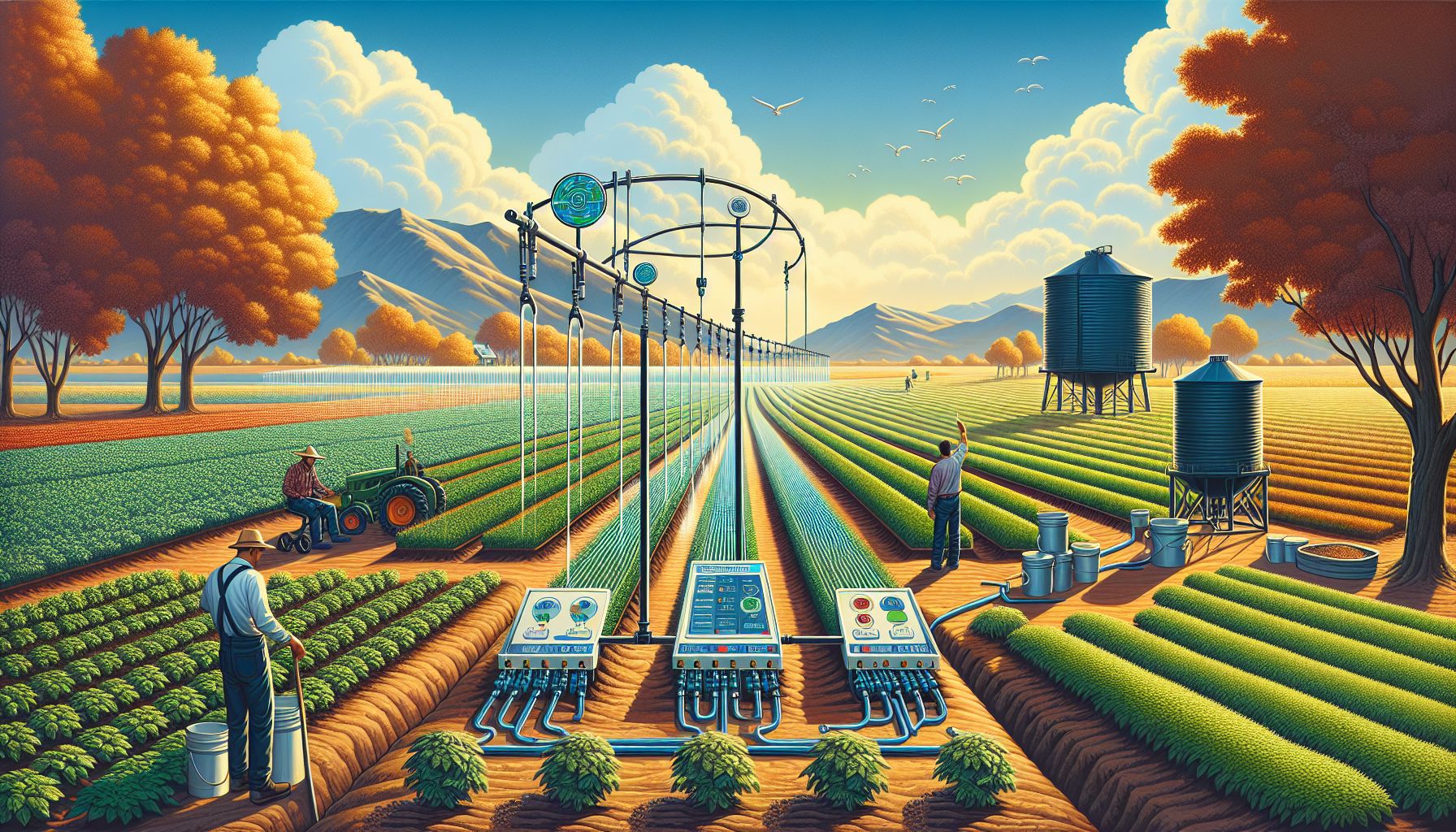
Switching from traditional irrigation methods like flood irrigation to more efficient systems such as drip or sprinkler irrigation can dramatically reduce water use. Drip irrigation delivers water directly to the plant’s root zone, minimizing losses due to evaporation or runoff, whereas sprinkler systems can be automated and adjusted to the specific water needs of the crop.
4. Rainwater Harvesting and Storage
Capturing rainwater to use for irrigation during dry periods is a simple yet effective way of managing water sustainably. Constructing small ponds or tanks can help store this water, ensuring that there is an adequate supply for crops during times of scarcity.
5. Managed Aquifer Recharge
Managed Aquifer Recharge (MAR) involves deliberately recharging groundwater with surface water during times of surplus to be used during periods of shortage. This technique ensures a continuous supply of water for agricultural use, while also helping to maintain the ecological balance of the groundwater system.
6. Precision Agriculture
Advancements in technology have led to the development of precision agriculture tools that assist farmers in applying water, fertilizers, and pesticides in exact amounts needed by crops. Sensors, drones, and satellite imagery help monitor field conditions, allowing for targeted irrigation, which reduces water usage and increases productivity.
7. Agroforestry
Integrating trees with crops and livestock can create a more diverse, productive, and sustainable land-use system. Trees can improve water infiltration and soil moisture retention, enhancing the sustainability of water resources on agricultural land.
8. Policy and Education
Implementing policies that incentivize the use of sustainable water management practices is essential. Educating farmers on the benefits and techniques of water conservation can drive widespread adoption.
Overcoming Challenges
Transitioning to sustainable water management in agriculture also means tackling challenges such as the initial cost of setting up new irrigation systems, the need for technical expertise, and the resistance to changing long-established farming practices. Nevertheless, the long-term benefits of sustainability, both environmental and economic, can outweigh these hurdles.
Training and Capacity Building
Organizations and governments can facilitate the change by offering training and capacity building to farmers. They can provide information on new technologies and techniques, and help farmers understand the cost-benefit ratios of adopting sustainable practices.
Financial Assistance
Subsidies, grants, low-interest loans, and other financial assistance schemes can support farmers during the transition to more sustainable water management systems.
Conclusion
Sustainable water management practices in agriculture are no longer optional; they are essential. As stewards of the land, farmers play a key role in preserving our water resources. By adopting the aforementione