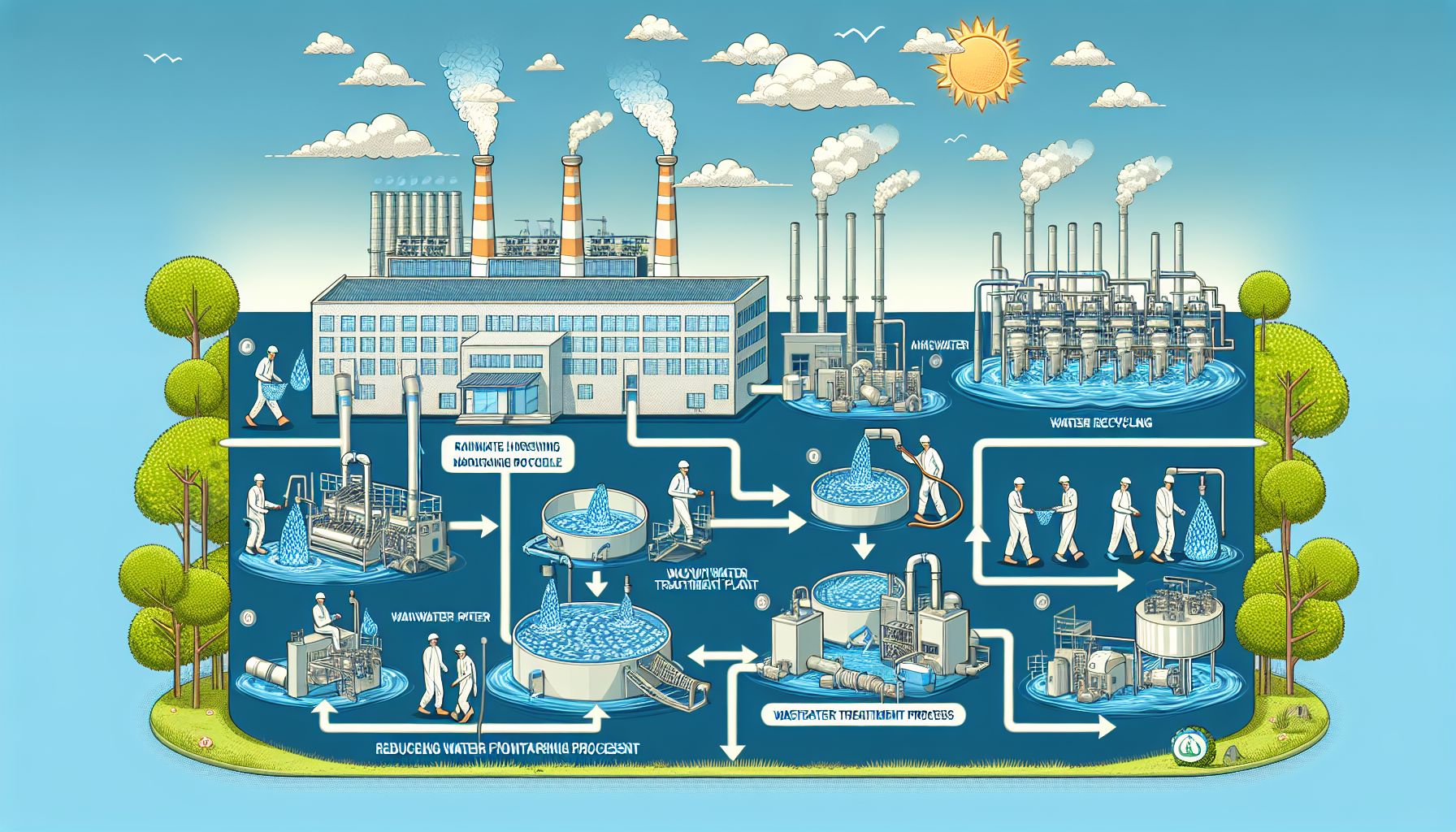
The textile industry is one of the most essential and oldest industries around the globe. It has clothed us, defined cultural identities, and stimulated economies. Unfortunately, it is also one of the largest consumers of water and a significant contributor to water pollution. As the awareness of environmental issues rises, the industry is under increasing pressure to reduce its water footprint. This article explores various strategies that can be implemented by the textile industry to conserve water and minimize pollution.
Understanding the Water Footprint
Before diving into strategies, it’s important to understand what ‘water footprint’ means. The water footprint of a product is the total volume of freshwater used to produce the product, measured over the full supply chain. It is not just the direct usage of water by an industry, but it also includes the indirect use along its supply chain, including the sourcing of raw materials.
In the textile industry, the water footprint is particularly high due to:
- The cultivation of water-intensive crops like cotton
- The dyeing and finishing processes that require large volumes of water
- The water used in the cooling and cleaning processes
Strategies for Reducing the Water Footprint
1. Sustainable Raw Material Sourcing
Cotton, one of the most common textiles, requires an enormous amount of water to grow. By shifting towards more sustainable materials such as organic cotton, hemp, bamboo, or recycled polyester, significant water savings can be made. Sustainable agricultural practices for cotton can include rain-fed crops rather than irrigated, and farming methods that retain more water in the soil.
2. Improved Process Management
Process optimization is key in reducing water usage. This includes monitoring water flow rates, improving rinse efficiency, and recirculating water wherever possible. Installing more efficient equipment that reduces the need for water in processes can lead to substantial savings.
3. Implementation of Water Recycling and Reuse Systems
Water recycling within the industry can drastically reduce the water footprint. This can involve the purification and reuse of process water, which not only cuts down on water consumption but also minimizes pollution by ensuring contaminated water does not enter the environment.
4. Waterless Dyeing Technologies
Dyeing textiles is notoriously water-intensive. Waterless dyeing technologies, which use supercritical CO2 or other solvents, can completely eliminate the need for water in the dyeing process. Although initial costs may be higher, the long-term savings on water and environmental impact make this an appealing option.
5. Promoting Digital Printing
Digital printing on textiles is far more water-efficient than traditional printing methods. Inkjet printing, for example, significantly reduces colorant and water use by directly printing designs onto fabrics, avoiding the multiple water-intensive baths traditional printing requires.
6. Rainwater Harvesting
Installing rainwater harvesting systems can help the industry become less dependent on groundwater or municipal supplies. Collected rainwater can be used for several industrial processes, reducing the pressure on freshwater resources.
7. Education and Training
Teaching staff about the importance of water conservation and providing training on how to implement water-saving techniques can lead to significant improvements. Awareness encourages innovation and the upkeep of good practices.
8. Working with the Supply Chain
Since a large part of the water footprint comes from the supply chain, textile companies must work with suppliers to ensure they are also employing water-saving strategies. Transparency and collaboration can foster a cohesive approach to water conservation.
9. Adopting Cleaner Production Principles
The implementation of cleaner production practices, such as minimizing waste, substituting hazardous chemicals, and recycling resources, can indirectly reduce the water footprint by creating processes that require less water to begin with.
10. Certifications and Compliance
Obtaining certifications such as the Oeko-Tex Standard 100 or the Global Organic Textile Standard (GOTS) not only helps in reducing the water footprint but also signals to customers that the products are environmentally responsible.
11. Investing in R&D
Research and development are crucial for discovering new materials and technologies that can reduce the industry’s reliance on water. Companies investing in R&D will be at the forefront of water conservation and potentially reap economic benefits from early adoption.
12. Consumer Awareness Campaigns
Educating consumers about the water footprint of the clothes they buy can shift demand towards more sustainable textiles. This, in turn, can create a market-driven push for manufacturers to adopt water-saving strategies.
13. Legislation and Policies
Stronger regulations and incentives from governments can motivate manufacturers to limit water usage. This could include subsidies for water-efficient technologies, taxation on high water usage, or legislation defining acceptable levels of water use and pollution.
14. Waste Water Treatment
Before effluent from textile factories is discharged, it must be treated to remove harmful chemicals and dyes. Implementing advanced wastewater treatment technologies can clean the water to a standard where it can be safely reused or returned to the environment.
15. Leakage Monitoring and Repair
Water loss due to leaks in the production process can be noteworthy. Regular monitoring, timely maintenance, and repair of the production systems can prevent this unnecessary waste of water.
Conclusion
The textile industry has a vast water footprint, but there are numerous strategies it can adopt to reduce its impact. Transitioning towards sustainable practices not only benefits the environment and conserves precious water resources but can also result in financial savings and a better public image for textile businesses.
As the industry welcomes a new era of sustainability, it’s not just about the preservation of resources; it’s also about securing a viable future in a market where consumers are increasingly valuing ecological responsibility. It’s an ongoing journey that will require innovation, commitment, and collective action, but the rewards – a healthier planet, sustainable economies, and abundantly available water – are certainly worth it.
Sources
- Bates, B., Z. Kundzewicz, S. Wu, and J. Palutikof, Eds. (2008). Climate Change and Water. Technical Paper of the Intergovernmental Panel on Climate Change. [IPCC Technical Paper VI].
- Mekonnen, M.M., and Hoekstra, A.Y. (2010). The green, blue and grey water footprint of crops and derived crop products, Hydrology and Earth System Sciences, 15, 1577-1600.
- Collier, A. (2020). “Digital Printing”, Textile Technology, Volume 2, Elsevier, pp. 67-89.