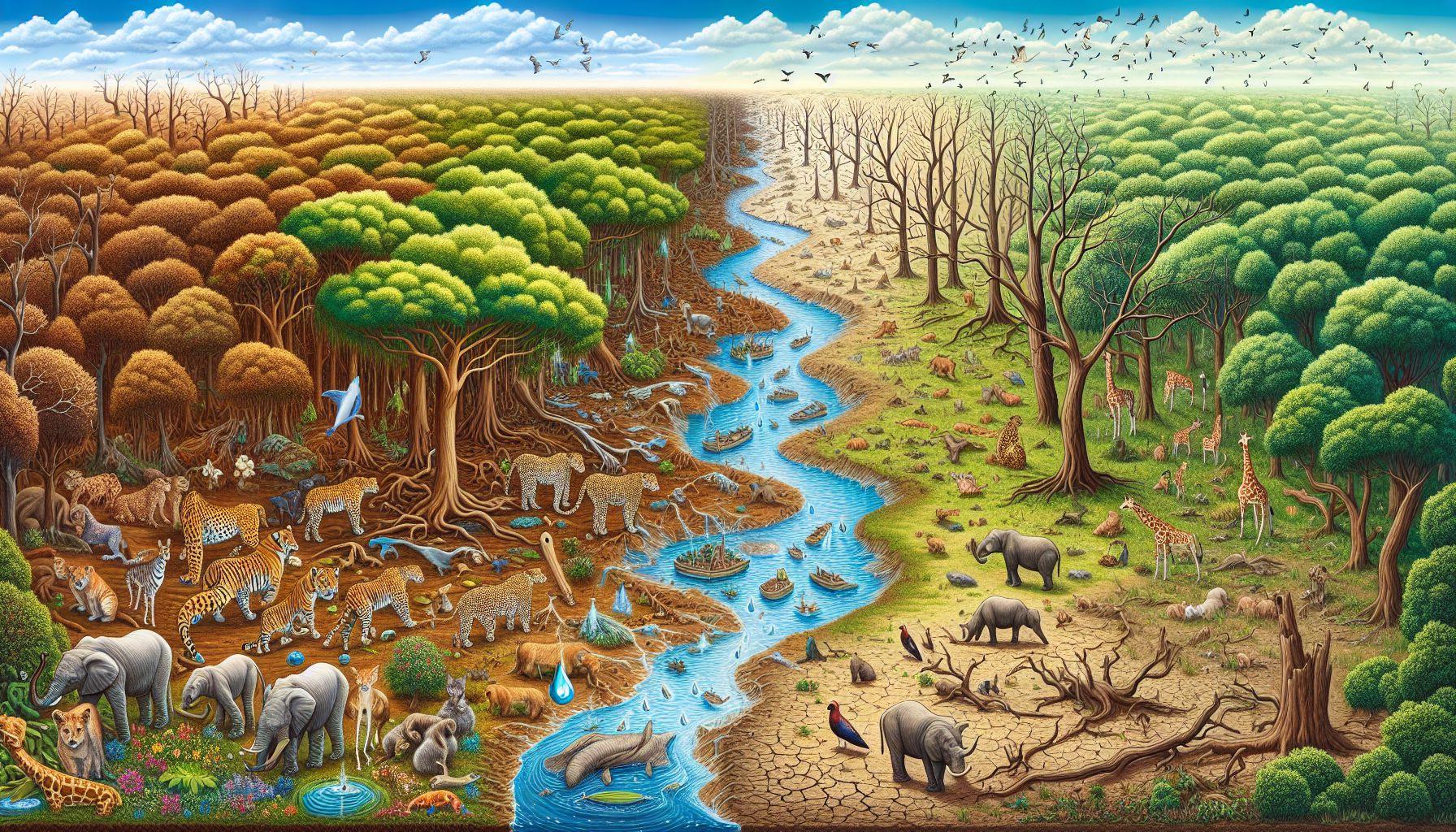
Climate change has increasingly become one of the most pressing issues facing our planet. Its impact on global water resources is profound and multifaceted, with consequences for ecosystems, human health, agriculture, and our economic well-being. In this comprehensive exploration, we will delve into understanding what climate change means for water resources across the planet and how nations and communities are responding to these challenges.
Contents
- Introduction
- The Water Cycle and Climate Change
- Accelerated Evaporation
- Changing Precipitation Patterns
- Melting Glaciers and Ice Caps
- Impact on Freshwater Resources
- Dwindling Water Supplies
- Water Quality Concerns
- Social and Economic Consequences
- Agriculture and Food Security
- Health Impacts
- Conflict and Displacement
- Adaptive and Mitigative Responses
- Policy Actions
- Technological Innovations
- Community Resilience
- International Cooperation
- Transboundary Water Management
- Global Initiatives
- Conclusion
- References
Introduction
As the Earth’s average surface temperatures rise, so does the complexity of the challenges related to water resources. Climate change not only affects the amount of available water but also dictates its distribution, timing, and quality. Through this lens, it is evident that effectively managing and protecting our water resources in a changing climate is essential for sustainable development, poverty reduction, and a stabilized global environment.
The Water Cycle and Climate Change
Accelerated Evaporation
Warmer temperatures lead to increased evaporation rates, affecting the amount of water available in soil, rivers, and lakes. The intensification of the water cycle also results in increased energy in the atmosphere, leading to more extreme weather events, such as heavy rainfall and storms.
Changing Precipitation Patterns
Climate change alters precipitation patterns, making rain and snowfall more erratic. While some regions experience floods, others face severe droughts. These shifting patterns disrupt the predictability and reliability of water resources that societies have come to depend on.
Melting Glaciers and Ice Caps
One of the most visible impacts of climate change is the melting of glaciers and ice caps. This contributes to rising sea levels and alters freshwater flows into ocean basins, affecting marine life cycles and coastal communities.
Impact on Freshwater Resources
Dwindling Water Supplies
Climate change has a direct effect on the availability of freshwater. Certain areas of the world are experiencing lower water levels in reservoirs and aquifers, which are crucial sources of drinking water and irrigation for agriculture.
Water Quality Concerns
Increased temperature can exacerbate water quality issues by promoting the growth of harmful algal blooms and affecting the natural treatment processes in aquatic ecosystems. Furthermore, heavy rains can lead to overflow of contaminants from agricultural and urban areas into water bodies.
Social and Economic Consequences
Agriculture and Food Security
Agriculture, highly dependent on water availability, is vulnerable to climate change. Changes in the water cycle can impact crop yields, leading to food scarcity and higher prices. Drought-prone regions are particularly at risk, and their economic stability is threatened by the climate crisis.
Health Impacts
Climate change affects water quality and availability, leading to heightened risks of waterborne diseases. Populations that lack access to clean water and sanitation are most at risk of health complications associated with contaminated water.
Conflict and Displacement
Water scarcity can fuel conflicts as communities, regions, and countries compete for dwindling resources. The displacement of populations due to changing water landscapes adds another layer to the global refugee crisis.
Adaptive and Mitigative Responses
Policy Actions
Governments and policymakers are tasked with implementing policies that promote sustainable water use, protect water sources from pollution, and develop infrastructures that can resist extreme weather events caused by climate change.
Technological Innovations
Advancements in technology play a crucial role in how societies can adapt to the new water realities. Innovations in water conservation, recycling, and desalination are emerging as key strategies to address water scarcity.
Community Resilience
Community-based programs that focus on water conservation, sustainable practices, and education are vital in building resilience against the impact of climate change on water resources.
International Cooperation
Transboundary Water Management
Many of the world’s rivers and lakes cross national boundaries. Effective management of these resources requires cooperation between nations to ensure equitable distribution and sustainable usage.
Global Initiatives
International organizations, such as the United Nations, are ramping up efforts to tackle the water-related challenges posed by climate change. Initiatives like the Sustainable Development Goals (SDGs) specifically address the need to conserve and sustainably use water resources.
Conclusion
The impact of climate change on global water resources is a challenge that calls for immediate and sustained action across all sectors of society. From individual behavior changes to international policy agreements, every effort counts in adapting to and mitigating the effects of this global phenomenon.
References
- United Nations Water. (n.d.). Climate Change and Water. UN-Water. http://www.unwater.org/water-facts/climate-change/
- Intergovernmental Panel on Climate Change (IPCC). (n.d.). Climate Change: Impacts, Adaptation, and Vulnerability. https://www.ipcc.ch/report/ar5/wg2/
- World Health Organization (WHO). (n.d.). Water, Sanitation, Hygiene, and Health. https://www.who.int/teams/environment-climate-change-and-health/water-sanitation-and-health