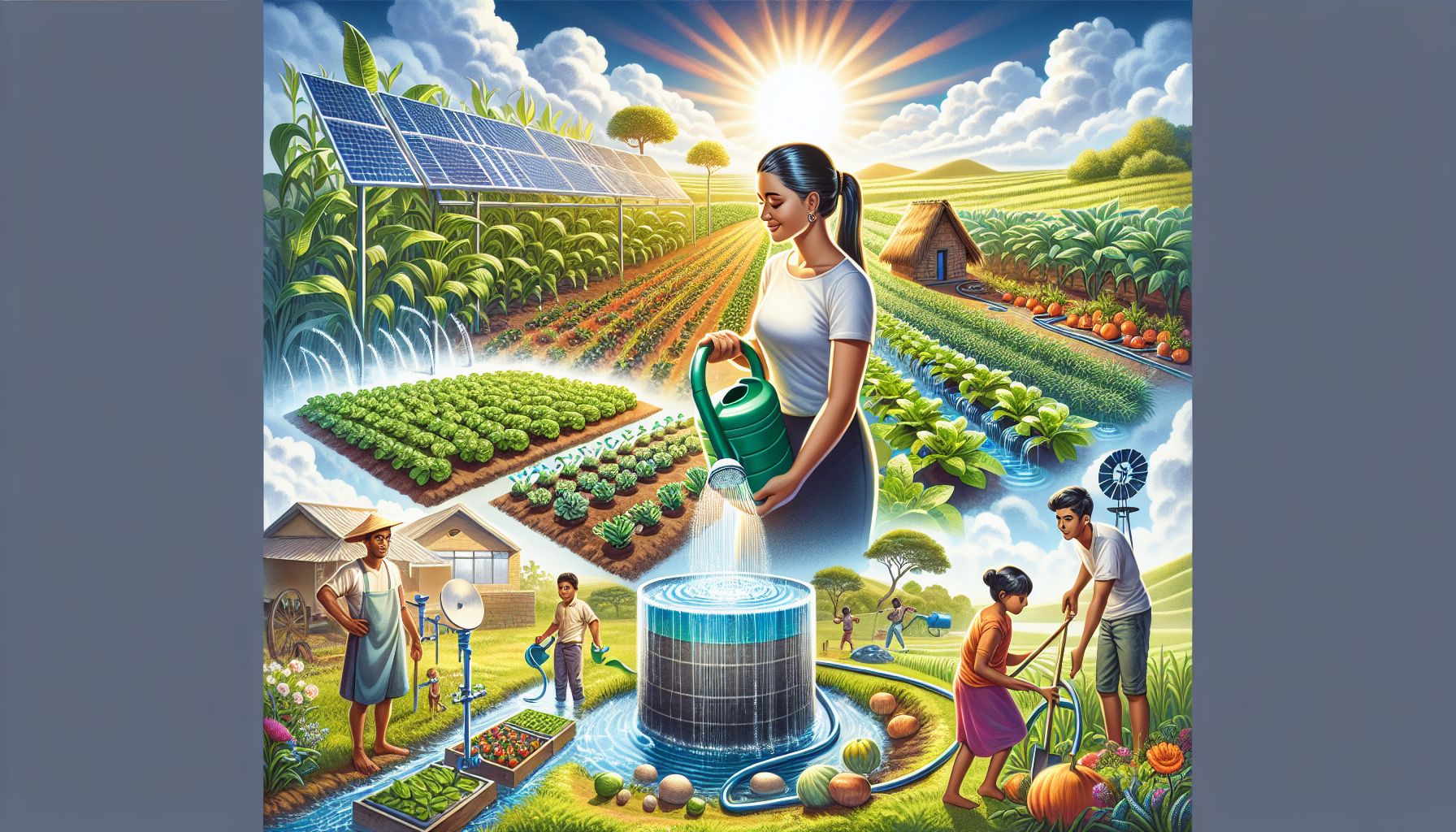
Agriculture lies at the heart of human survival; it’s the primary source of our food, and at its core, it is deeply interwoven with the availability of water. With agriculture consuming around 70% of the world’s freshwater supplies, it’s essential that we look for and implement sustainable water management practices. In this article, we’ll delve into how sustainable water management practices are not only beneficial but necessary for agriculture, especially against the backdrop of a growing population and the increasing threat of climate change.
Understanding the Importance of Water in Agriculture
Water in agriculture is used for a variety of purposes; from irrigation of crops to the watering of livestock, and the processing of agricultural products. Healthy crops require sufficient water, and without it, both the quality and quantity of produced food can be significantly impacted. It is, therefore, important for the agricultural sector to use water in a way that preserves this precious resource for the future while meeting present-day demands.
Sustainable Practices in Water Management for Agriculture
1. Efficient Irrigation Techniques
Drip Irrigation:
Drip irrigation is a method where water is delivered directly to the roots of plants in a slow, steady manner, minimizing evaporation losses. This technique can potentially save up to 80% more water than conventional irrigation methods.
Sprinkler Systems:
New-age sprinkler systems come equipped with moisture sensors and deliver water only when necessary, reducing overwatering and wastage. Mobile and center pivot sprinklers are more precise in application consistent with crop water requirements.
2. Soil Moisture Conservation
Mulching:
Covering the soil with a layer of organic materials like straw or leaves (mulching) helps to retain soil moisture, reduce evaporation and prevent weed growth which in turn saves water that would be consumed by the weeds.
Conservation Tillage:
Conservation tillage, including no-till or reduced-till farming methods, leaves the previous year’s crop residue on the fields before and after planting the next crop. This helps retain soil moisture and structure.
3. Crop Rotation and Diversification
Rotating crops and cultivating a diverse range of crops adds to the soil’s health and mitigates the risk of overusing water resources for a single, water-intensive crop. Additionally, intercropping can also lead to efficient water utilization.
4. Rainwater Harvesting
Catchments, ponds, and tanks used to collect and store rainwater can provide a supplementary water source for agriculture during dry seasons, reducing reliance on freshwater bodies.
5. Water Recycling and Reuse
Treated wastewater, also known as reclaimed water, can be used for irrigation. Many countries now treat their wastewater to a level that is safe for agricultural use, thus saving fresh water for drinking and other critical uses.
6. Agroforestry
Incorporating trees into agricultural landscapes (agroforestry) can improve groundwater recharge, reduce surface runoff and increase soil moisture through shade and reduced wind speeds.
7. Integrated Pest Management (IPM)
IPM aims to manage pests with minimal environmental impact. It reduces the need for water-contaminating chemical pesticides, creating less demand for water to dilute and disperse these pollutants.
The Role of Technology in Water Management
Smart Irrigation Systems:
The rise of smart agriculture has seen the development of sophisticated irrigation systems equipped with sensors that monitor soil moisture levels, weather forecasts, and evaporation rates to adjust watering schedules and amounts automatically.
Precision Agriculture:
GPS and GIS technologies allow farmers to analyze fields at a microscopic level, leading to a more effective distribution of water and resources and reducing waste.
Economic Incentives and Policies
Governments and NGOs can play a significant role in promoting sustainable water management practices. Subsidies for water-conserving equipment, tax incentives for adopting sustainable practices, and fines for wasteful water usage are some ways that policies can drive change.
Challenges and Barriers to Implementation
Adopting sustainable water management practices is not without its challenges. High initial costs, lack of knowledge, and resistance to change are common barriers. There is a need for investment in research, education, and infrastructure to overcome these obstacles.
The Future of Water Management in Agriculture
Innovation in water management practices is constantly evolving, with scientists researching drought-resistant crop varieties, alternative watering methods, and more efficient use of greywater and desalinized water.
Conclusion
With the world’s population predicted to reach nearly 10 billion by 2050, efficient and sustainable water management practices in agriculture have become not just desired but crucial. Farmers, policymakers, and consumers all have roles to play in ensuring that the water needs of today do not compromise the ability of future generations to meet their own needs.
Sources
-
FAO – Food and Agriculture Organization of the United Nations. (n.d.). “Irrigation in agriculture”. Retrieved from http://www.fao.org/3/i2800e/i2800e05.pdf
-
World Bank. (n.d.). “Water in Agriculture”. Retrieved from https://www.worldbank.org/en/topic/water-in-agriculture#1
-
USDA – United States Department of Agriculture. (n.d.). “Soil Health Management”. Retrieved from https://www.nrcs.usda.gov/wps/portal/nrcs/main/soils/health/mgnt/
Adopting sustainable water management practices is vital for our future food security and environmental conservation. It is a complex task that requires local and global cooperation—and the time to act is now.