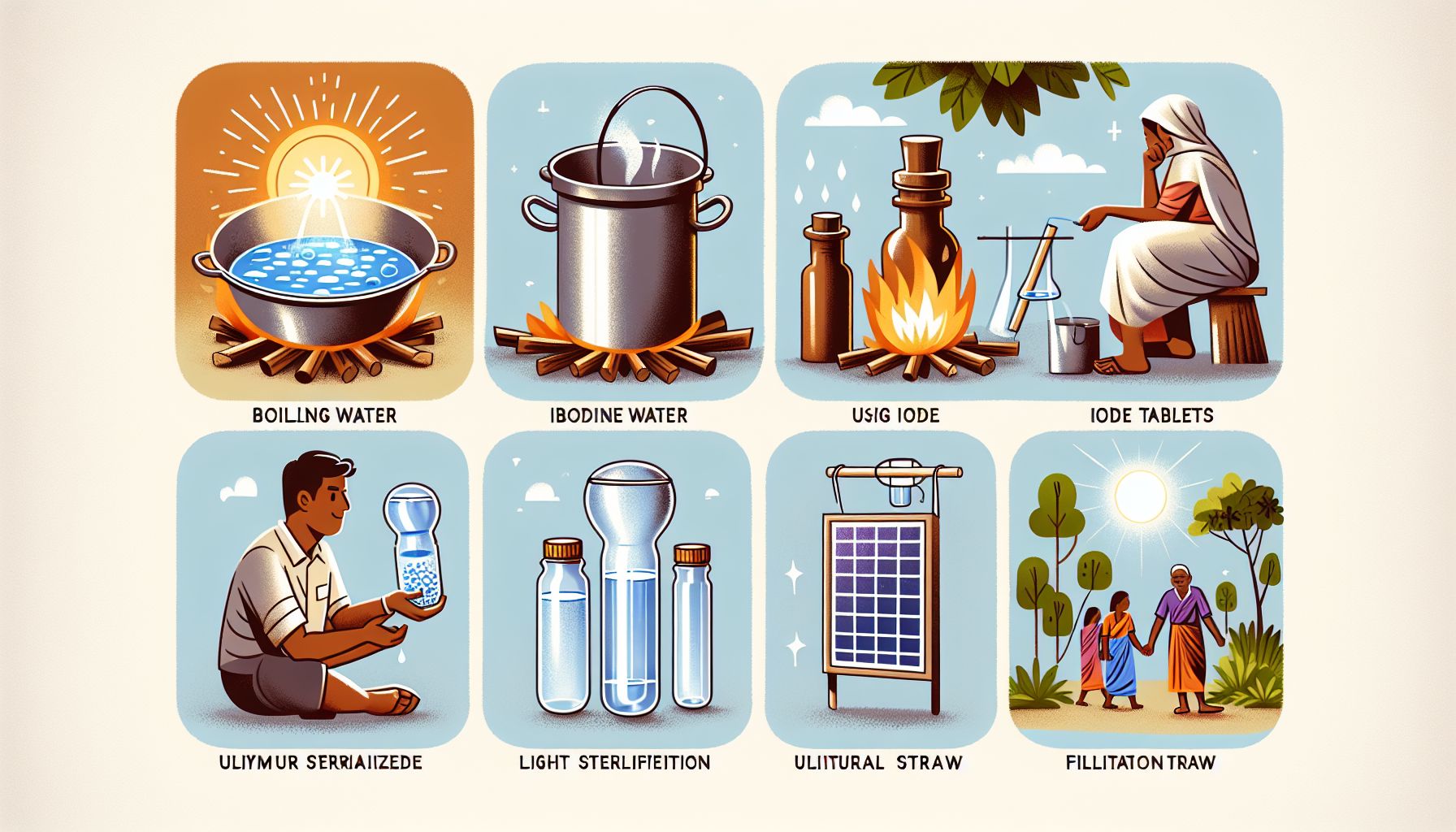
Waterborne diseases pose a significant health threat in emergency situations, such as natural disasters, conflicts, or outbreaks. In the aftermath of a disaster, the normal water supply can be disrupted and can become contaminated, increasing the risk of diseases like cholera, dysentery, and typhoid. Providing access to clean drinking water is thus a critical aspect of emergency response. This article delves into the most effective water disinfection methods suited for emergency conditions, including their mechanisms, advantages, limitations, and implementation strategies.
Boiling
Boiling is one of the simplest and most effective methods of water disinfection. The process involves heating water to a rolling boil for at least one minute, which kills pathogens such as viruses, bacteria, and parasites. In high altitude areas, where the boiling point of water is lower, water should be boiled for at least three minutes.
Advantages:
– Highly effective against most pathogens
– No need for chemical additives
– Easy to understand and implement
Limitations:
– Requires a significant amount of fuel, which could be scarce in an emergency
– Time-consuming for large volumes of water
– Does not remove chemical contaminants
Chlorination
Chlorination is the process of adding chlorine to water to disinfect it. It is effective against many pathogenic organisms and is widely used in emergency situations. The chlorine can be in the form of liquid bleach, chlorine tablets, or granular chlorine (calcium hypochlorite).
Advantages:
– Easy to distribute and use
– Residual effect that continues to disinfect water as it sits in storage
– Effective at low concentrations
Limitations:
– Can create harmful by-products if the water contains organic material
– The taste and odor of chlorine can be objectionable to some people
– Requires careful handling and dosing
Ultraviolet Light Disinfection
Ultraviolet (UV) light disinfection involves passing water through a device that emits UV light, which damages the DNA of pathogens, rendering them harmless. Portable UV light devices are available and suitable for small volumes of water.
Advantages:
– Quick and effective at inactivating a wide range of pathogens
– Chemical-free process
– Leaves no residual taste or odor
Limitations:
– Requires power supply or batteries, which may be limited in emergencies
– Turbidity in water can shield organisms from UV light exposure
– Does not work well for large-scale disinfection
Solar Disinfection (SODIS)
Solar disinfection, or SODIS, uses sunlight to disinfect water through a combination of UV radiation and increased temperature. Clear plastic bottles are filled with water and left in the sun for at least six hours on a sunny day or two consecutive days if it’s cloudy.
Advantages:
– Low-cost and low-tech method easy to implement in resource-poor settings
– Utilizes readily-available resources (sunlight and plastic bottles)
– Environmentally friendly
Limitations:
– Requires clear weather conditions and strong sunlight
– Only practical for small-scale disinfection
– Less effective with turbid water
Ceramic Filters
Ceramic filters use porous ceramic to physically remove pathogens from water as it passes through the material. Some filters are also treated with silver, which acts as a bactericide.
Advantages:
– Removes bacteria and protozoa
– Long-lasting and can be cleaned and reused
– No chemical additives required
Limitations:
– Does not remove viruses
– Flow rates can be slow, and more appropriate for household use than community-wide solutions
– Can break easily and needs careful handling
Chemical Tablets or Drops
Chemical disinfection tablets or drops, often based on chlorine or iodine, are added to water to kill microorganisms. They come prepackaged in specific doses, which makes them easy to distribute and use in an emergency.
Advantages:
– Portable and convenient
– Effective against a wide range of pathogens
– Individual packaging is suitable for personal or small group use
Limitations:
– Can leave an aftertaste or odor
– Some people are allergic to iodine
– Does not remove chemical contaminants
Bio-sand Filters
Bio-sand filters are a variation of slow sand filtration specifically designed for intermittent use. Water moves through layers of sand and gravel where biological and physical processes remove pathogens and suspended solids.
Advantages:
– Effective against a broad range of pathogens
– Long-lasting, with low operation and maintenance costs
– Suitable for household and small community applications
Limitations:
– Initial setup is more intricate and requires some technical knowledge
– Not as rapid as other methods
– Requires a certain level of maintenance to remain effective
Ozone Treatment
Ozone treatment uses ozone gas, a powerful oxidant, to disinfect water. While less commonly applied in field conditions due to the equipment required, portable ozone generators can be suitable for emergency situations in fixed locations.
Advantages:
– Very effective at inactivating bacteria, viruses, and protozoans
– Does not leave harmful residuals
– Improves the taste and odor of water
Limitations:
– Requires electricity and complex machinery
– More suited for community-scale applications than individual use
– Can be costly and require technical expertise
Implementing Effective Disinfection in Emergencies
Selecting the appropriate water disinfection method in an emergency situation depends on several factors, including the availability of resources, the scale of need, water quality, and technical capacity. Coordination with local authorities and humanitarian organizations is crucial to ensure the most appropriate methods are chosen and properly implemented.
Effective communication and education programs must accompany the distribution of disinfection supplies or equipment. This ensures individuals know how to properly use these tools and understand their importance in preventing disease. Consistent monitoring and assessment of water quality post-disinfection are also necessary to validate the effectiveness of the chosen method and to make adjustments as needed.
Conclusion
Access to safe drinking water is a fundamental need, especially during emergency situations where the risk of waterborne diseases is heightened. A variety of water disinfection methods provide options for making water safe for consumption, each with its advantages and limitations. It is essential that emergency response plans include considerations for the rapid deployment of water disinfection solutions, as well as comprehensive strategies for education and monitoring to safeguard public health.
Sources:
1. World Health Organization. (n.d.). Water sanitation hygiene. https://www.who.int/topics/water_sanitation_health/en/
2. Centers for Disease Control and Prevention. (2013). Emergency Water Supply Planning Guide for Hospitals and Health Care Facilities. https://www.cdc.gov/healthywater/emergency/creating-managing-emergency-water-supply.html
3. Sphere Association. (2018). The Sphere Handbook: Humanitarian Charter and Minimum Standards in Humanitarian Response. https://spherestandards.org/handbook/