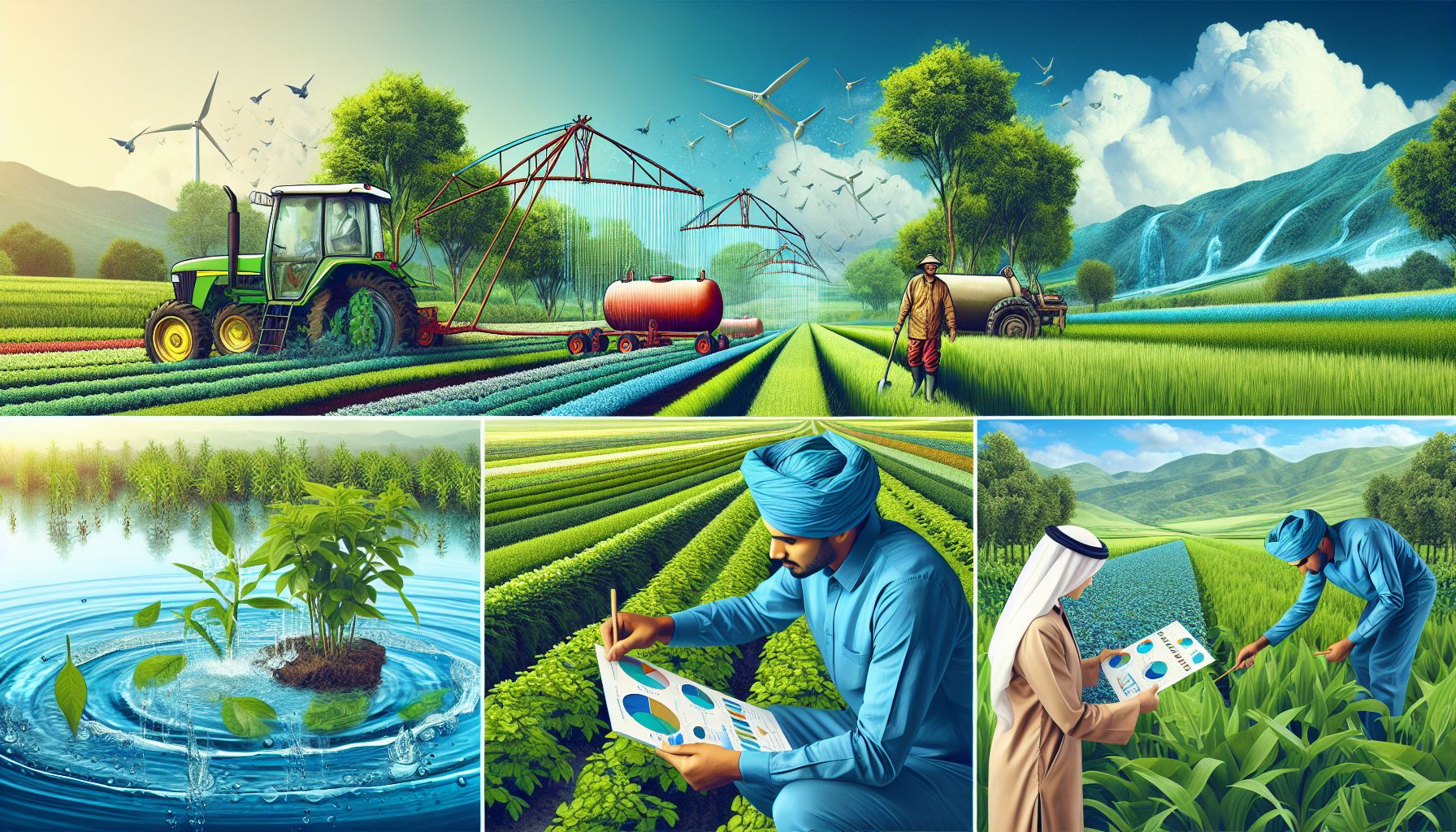
Agriculture is the backbone of many economies around the world and is vital for food production. However, agriculture is also a significant consumer of water, accounting for roughly 70% of fresh water withdrawals globally. With the growing pressures of climate change, water scarcity, and an ever-increasing food demand due to population growth, sustainable water management in agriculture has become more crucial than ever. In this article, we will explore various sustainable water management practices that can help in promoting efficient use of water resources while maintaining the productivity of agricultural lands.
Understanding the Water Crisis
Before delving into the practices, it’s critical to recognize the global water crisis we face today. With climate change impacting weather patterns, many regions suffer from severe droughts more frequently. Additionally, water sources are often mismanaged or overused, leading to depletion. The World Resources Institute (WRI) reports that by 2025, two-thirds of the world’s population may face water shortages.
Conservation Tillage
Conservation tillage is a method in which the soil is only minimally disturbed, or not at all, which helps to preserve soil moisture. Techniques like no-till or minimum tillage leave the previous year’s crop residue on the field to reduce evaporation and runoff, thereby conserving water.
Crop Rotation and Diversification
Rotating crops can improve soil structure and health, leading to better water retention. Additionally, diversifying crops can reduce water usage since not all crops require the same amount of water, allowing for more efficient water distribution based on crop needs.
Irrigation Scheduling
Irrigation scheduling involves watering crops at the right time and in the right amounts. This can be achieved through improved technology such as soil moisture sensors, weather-based irrigation controllers, or smart irrigation systems that take into account real-time data to optimize water usage.
Drip Irrigation
Drip irrigation delivers water directly to the plant’s roots, reducing evaporation and runoff. It’s remarkably efficient compared to traditional sprinkler systems, which can have a high rate of water loss due to wind and evaporation.
Rainwater Harvesting
Collecting and storing rainwater for agricultural use is a traditional practice that is regaining popularity. This can significantly reduce dependency on surface water or groundwater resources. Rainwater can be collected from roof surfaces or specially constructed catchment areas.
Mulching
Mulching involves covering the soil with organic materials like straw, leaves, or compost. This can help retain soil moisture by reducing evaporation, as well as suppressing weed growth which competes with crops for water.
Improved Water Storage and Recovery
Building reservoirs, ponds, and tanks to store water can be a significant advantage during dry periods. These structures enable the capturing and storage of water from wet seasons for use during droughts. Additionally, improving the recovery of water used in agriculture, such as from irrigation runoff, can enhance water efficiency.
Integrated Pest and Nutrient Management
Efficient management of pests and nutrients can improve plant health and, in turn, water usage effectiveness. Healthier plants make better use of water, and by applying only the necessary amount of fertilizers and pesticides, water pollution is reduced.
Agroforestry
Integrating trees and shrubs with crops and pastureland, or agroforestry, contributes to better water infiltration and reduces soil erosion. Trees can also provide shade, reducing evaporation from both the soil and pond surfaces.
Managed Aquifer Recharge (MAR)
Managed aquifer recharge involves intentionally recharging aquifers with available surface water during times of surplus. This can help replenish groundwater levels, ensuring that there is a reserve of water during periods of shortage.
Innovative Crop Selection
Selecting drought-resistant or native crop varieties can reduce water requirements. These crops are often better adapted to local environmental conditions and can survive with less water than conventional crops.
Water User Associations
Water User Associations (WUAs) are collective groups that manage water allocation among farmers in an equitable manner. These groups promote cooperation and efficient water usage at the community level.
Education and Extension Programs
Efforts to educate and train farmers on sustainable water management practices can have a significant impact. Extension programs can provide the necessary knowledge and techniques, empowering farmers to adopt water-saving measures.
Technology and Internet of Things (IoT)
Leveraging technology like the IoT for smart agriculture can lead to significant improvements in water management. Automated systems powered by data collection and analysis can make precise decisions regarding irrigation, thus enhancing efficiency.
Policy and Incentive Structures
Implementing policies that promote water conservation and providing incentives for farmers who adopt sustainable practices can support the shift towards better water management in agriculture.
Looking Ahead
The future of agriculture depends on our ability to manage water resources sustainably. By integrating various management practices such as improving irrigation efficiency, adopting conservation tillage, and leveraging technology, the agricultural sector can substantially reduce its water footprint while ensuring that the growing global population is fed.
Sources:
-
Food and Agriculture Organization of the United Nations. (2021). “The State of Food and Agriculture 2020. Overcoming water challenges in agriculture.” http://www.fao.org/3/ca8080en/CA8080EN.pdf
-
World Resources Institute. (2019). “Aqueduct Water Risk Atlas.” https://www.wri.org/applications/maps/aqueduct-atlas/#x=0.00&y=0.00&l=2&v=home&d=bws&f=0&o=99
-
United States Department of Agriculture – Natural Resources Conservation Service. (2019). “Soil Health Practices.”
https://www.nrcs.usda.gov/wps/portal/nrcs/main/national/soils/health/
This comprehensive approach to water management in agriculture has the potential to alleviate water scarcity issues while enhancing the resilience of agricultural systems against the backdrop of changing environmental conditions.