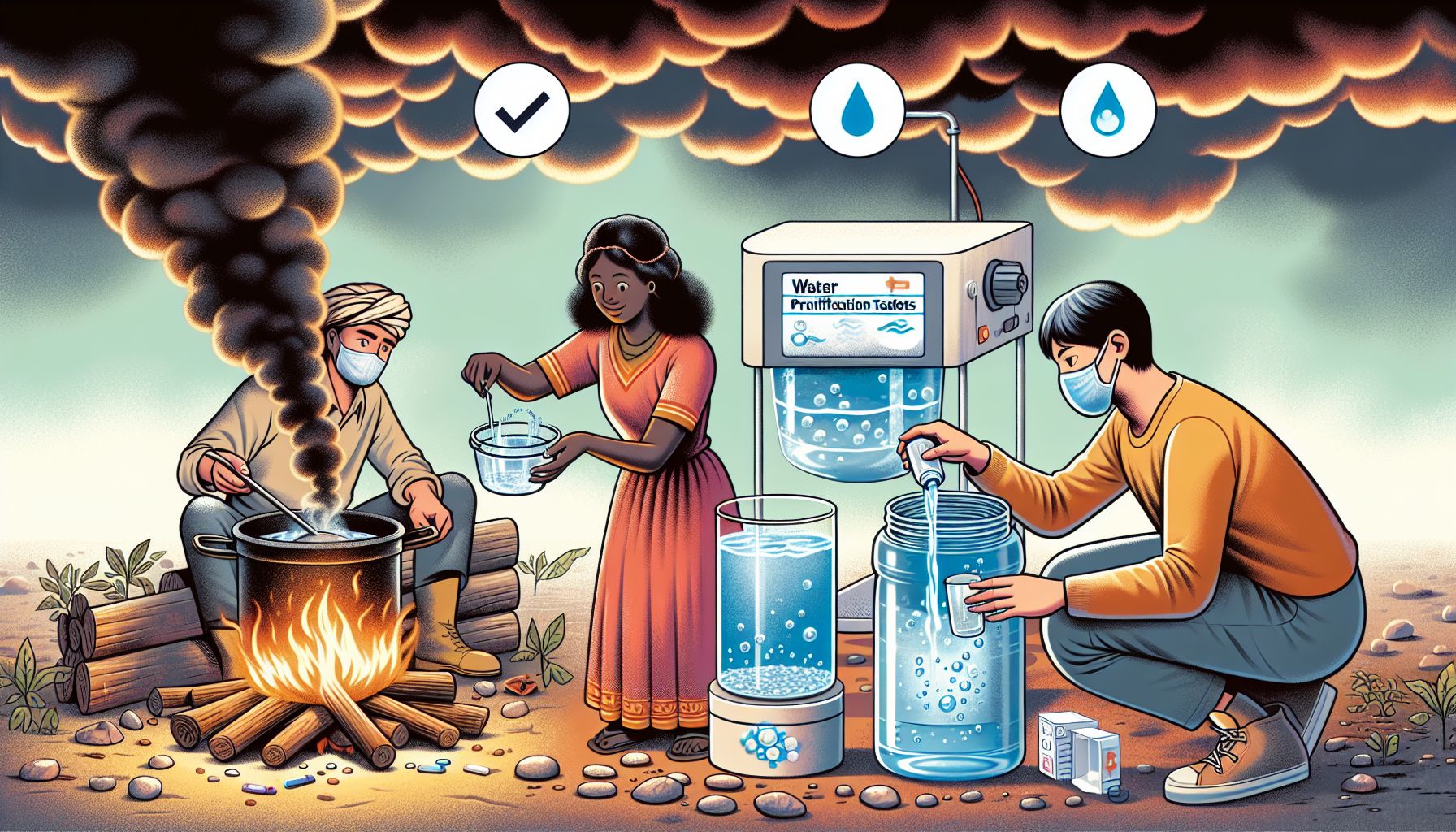
In an emergency situation, one of the most critical resources we need for survival is clean, safe water. It is a fundamental right and a practical necessity for humans to have access to uncontaminated water for drinking, cooking, and sanitation. However, access to safe water can be compromised in several emergency situations, such as natural disasters (earthquakes, floods, hurricanes, etc.), water source contamination, or when traveling to areas with insufficient water treatment facilities.
In such cases, it becomes crucial to learn about the effective disinfection methods to treat water and make it safe for consumption. Thus, let’s say in this article we will explore the different techniques for disinfecting water in emergencies, their advantages, and disadvantages, and how you can carry them out accurately.
Boiling
Boiling is one of the most traditional, accessible, and reliable methods to purify water in emergencies. It involves heating water to a rolling boil for at least one minute. This process kills or inactivates harmful pathogens, including bacteria, viruses, and parasites, ensuring the water is safe to drink^1^.
For high-altitude locations above 2,000 meters, the boiling time should be increased to three minutes as the boiling point of water decreases with altitude.
Advantages: Easy to implement, affordable, and highly effective.
Disadvantages: It requires access to a heat source and fuel, is not feasible for large volumes of water, and does not remove chemical pollutants or solid particles.
Chlorination
Chlorination involves adding chlorine to water to disinfect it. The chlorine reacts with the water to form substances capable of destroying disease-causing microorganisms^2^. Chlorine tablets, liquid chlorine, or bleach can be used for this purpose.
Advantages: Easy to carry out, does not require heat, and effective against the majority of pathogens.
Disadvantages: The water must be clear for chlorine to work effectively, and the process may leave a slight taste or odor in the water. It is also less effective against some microorganisms like Cryptosporidium.
UV Purification
Ultraviolet (UV) purification involves exposing water to UV light. This radiation disrupts the DNA of harmful microbes and disables their ability to reproduce[^3^].
Advantages: Effective against almost all types of bacteria and viruses.
Disadvantages: Requires a power source, the water must be clear, and does not remove chemical contaminants.
Distillation
Distillation involves heating water and collecting the vapor, which condenses back into liquid in a separate container. This process kills pathogens and also separates water from chemical contaminants and solid particles.
Advantages: Highly effective in purifying water and also removes non-biological contaminants.
Disadvantages: Requires a heat source and a distillation set-up, which makes it less feasible for large volumes of water.
Portable Water Filters
Portable water filters remove pathogens by physically straining them out as the water passes through the filter.
Advantages: Easy to carry and use, able to treat a large quantity of water, and does not leave any taste.
Disadvantages: They cannot filter out viruses due to their tiny size and also do not remove chemicals.
In conclusion, the most suitable water disinfecting method depends on the specific situation, the available resources, and the quality of the water source. It is always ideal to have knowledge about diverse water disinfection techniques’ application and effectiveness, to keep yourself prepared for any given emergency situation.
Remember, safe water is a vital asset in emergencies, and its correct disinfection is a crucial step in securing your health and survival.
[^3^]: Bartels, C. (2002). “Advances in UV disinfection technology”. Water Engineering & Management. https://www.waterworld.com/home/article/16201549/advances-in-uv-disinfection-technology