Groundwater is a critical resource that enables life to flourish on Earth. Serving as a primary source of fresh water, it plays an integral role in satisfying the needs of billions of people worldwide. Human activities such as agriculture, municipal supply, and industry depend extensively on groundwater for sustainability. However, due to overexploitation and climate change, the reservoirs or aquifers holding groundwater are under significant stress. Depletion of the resource without an equivalent rate of replenishment can lead to a crisis of freshwater scarcity.
To abate this alarming issue, sustainable aquifer management is paramount. More specifically, groundwater recharge, which involves the process of enhancing the natural replenishment of aquifers, is seen as a viable solution to achieve this goal.
What is Groundwater Recharge?
Groundwater recharge or deep percolation is a hydrologic process where water moves from the surface to the aquifers. This technique enhances the natural renewal of groundwater resources by facilitating the percolation of water through the soil layers to replenish aquifers (source).
The rate and amount of recharge can vary widely based on the climatic variables, land use, soil type, and the structure and properties of the aquifer. The concept of groundwater recharge isn’t new, but its importance and applications have been widely recognized only in the past few decades, mainly due to declining groundwater levels and increasing demands for fresh water.
Techniques for Groundwater Recharge
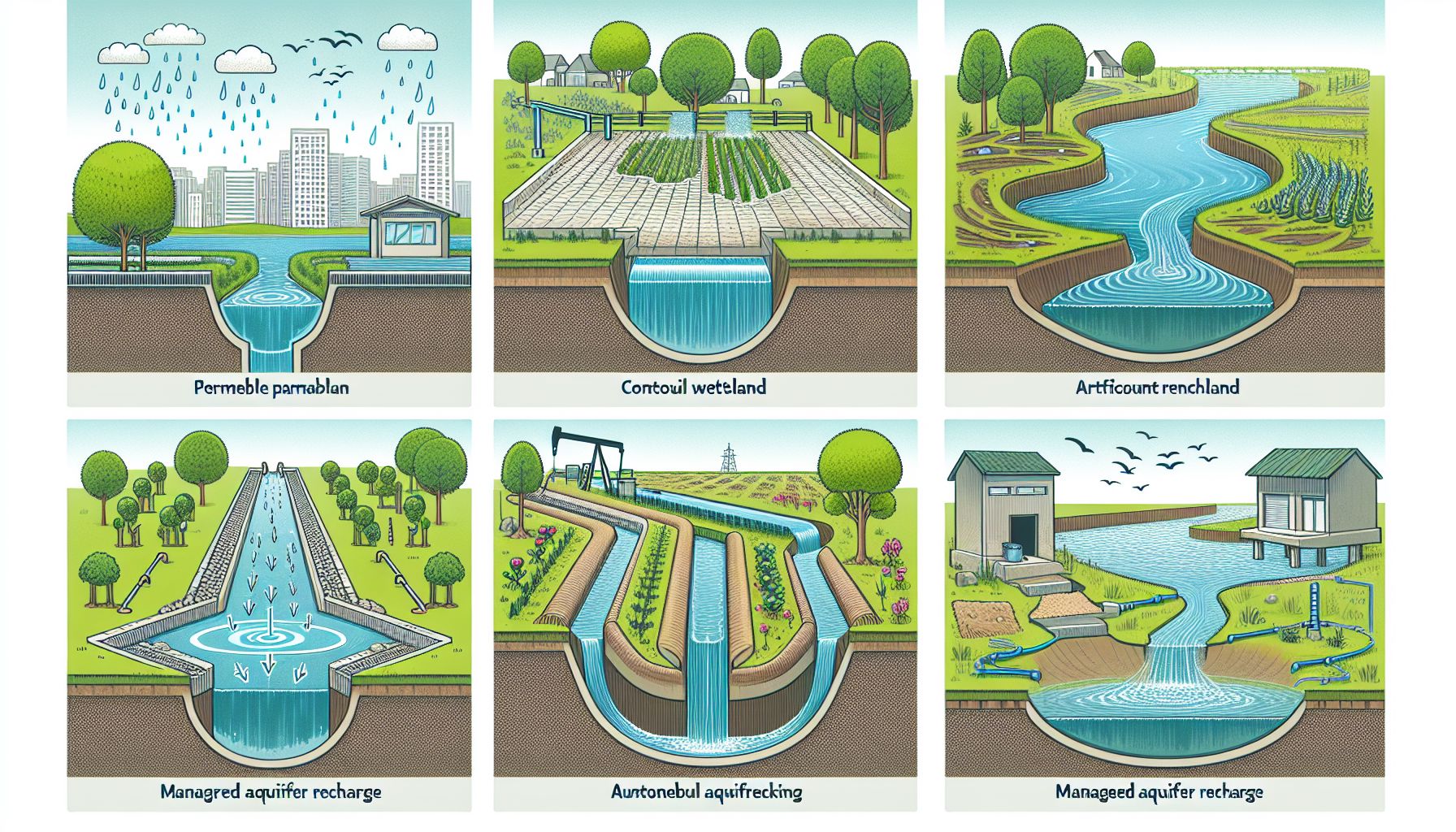
There are several man-made recharge techniques that can be used. These methods can be broadly classified into two types: surface and subsurface methods.
Surface Recharge Methods:
-
Spreading methods: These techniques involve spreading water over the ground surface to allow percolation into the aquifers. This can be facilitated through systems like recharge basins, recharge ditches, and contour trenches.
-
Water Conservation Structures: Building small dams or check dams along the drainage channels can help in enhancing the groundwater recharge capacity.
Subsurface Recharge Methods:
-
Recharge Wells: These are used to directly inject water into the aquifers. Various types, including gravity wells and pressure wells, are used based on the hydrogeological conditions and the quality of the recharged water.
-
Recharge Shafts and Recharge Galleries: These allow the recharge of aquifers that are located underneath a layer of impermeable soil or rock.
Factors Influencing the Choice of Method
The choice of the recharge method depends on several factors including the type of aquifer, groundwater use and sources, topography, soil type, socio-economic considerations, and the available quality and quantity of water (source).
Importance of Managed Aquifer Recharge
Managed Aquifer Recharge (MAR) is strategic and planned recharge, meant for subsequent recovery or environmental benefit. It is a significant measure for sustainable aquifer management. It provides solutions to problems such as over-exploitation, salinity intrusion in coastal aquifers, and improving the quality of groundwater (source).
The application of MAR techniques, when integrated with appropriate water management strategies, can contribute significantly to groundwater conservation and sustainability.
Challenges and Conclusion
While groundwater recharge presents immense potential, several challenges need to be addressed for a successful implementation. These include technical knowledge gaps, lack of awareness, institutional frameworks, financial costs, and impacts on ecosystems.
In conclusion, sustainable aquifer management through groundwater recharge techniques deserves critical attention from the scientific community, policy-makers, and stakeholders alike. As our understanding improves, and with the adoption of appropriate strategies, we can significantly enhance our capacity to sustainably manage this invaluable resource.