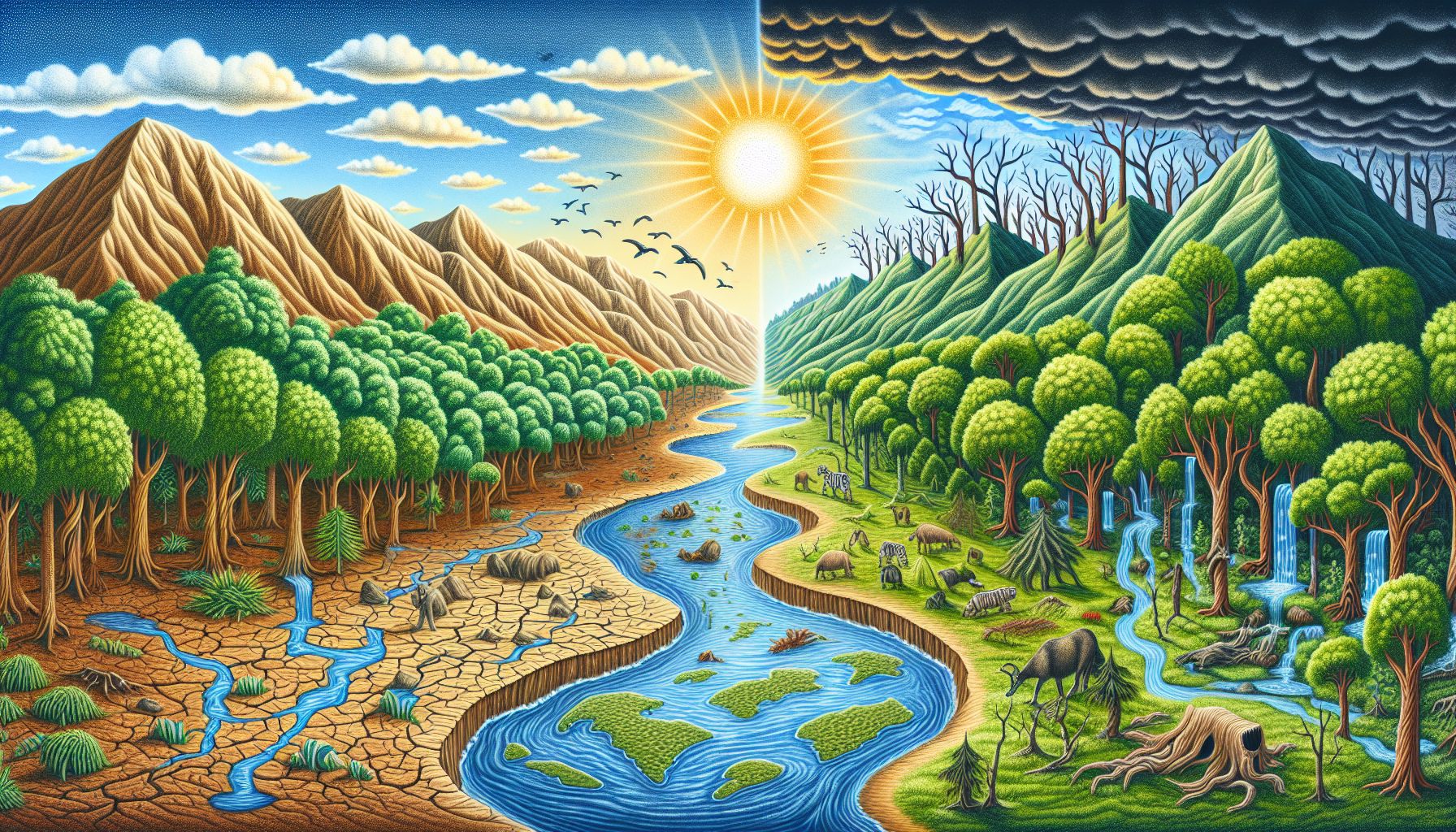
Access to clean, freshwater is a fundamental human need. Yet, this valuable resource has been subjected to the wrath of one of the most significant crisis humanity is challenged by – climate change.
The impact of climate change on global water resources is notable as it not only disrupts the water’s natural cycle but also jeopardizes the very essence of human existence. The connection is simple yet pertinent — rising temperatures influence evaporation, entail greater water demand, and cause more frequent and severe weather events with subsequent effects on water availability globally.
The Hydrologic Cycle Disrupted
The hydrologic cycle or the water cycle encapsulates the continuous movement of water on, above, and below the surface of the Earth. It involves the evaporation of water from the ocean surface, forming clouds, which precipitate back to the surface as rain or snow.
Climate change alters patterns in this cycle through the augmentation of temperatures. The rate of evaporation heightens with warmer climates, contributing to a modified magnitude and distribution of rainfall, variability in river flows, and shifts in groundwater recharge (Source: “Water and Climate Change,” United Nations).
Drier Lands, less Water
Climate change intensifies the process of evapotranspiration, in which water is transferred from the land to the atmosphere by evaporation from soil and other surfaces and by transpiration from plants.
This means that even if areas with consistent rainfall levels continue receiving the same amount of precipitation, the increased rate of evapotranspiration can cause them to become drier leading to more droughts and simultaneous water scarcity. This could severely impact agriculture, destabilising food security.
Weather Extremities and Water management
Another evident effect of climate change on water resources is the increasingly prevalent and severe weather events. As global temperatures rise, incidents of devastating droughts and catastrophic floods have become more frequent.
Both these extremities can render water resources unusable. Droughts deplete different sources of freshwater, while intense rainfall and consequent flooding increase runoff, reduces infiltration into the ground, causing strain on reservoirs and dams and often leading to contamination of water supply.
Climate Change and Depleted Groundwater
One of the silent victims of climate change has been the freshwater stored in underground aquifers called groundwater. Critical for both drinking water supply and irrigation, groundwater is recharged via precipitation.
Changes in patterns of precipitation combined with the increasing temperature might lead to a lower rate of groundwater recharge, leading to depletion of this critical water resource. This could have irreplaceable repercussions, especially since groundwater offers a buffer in times of surface water scarcity (Source: “Climate change can deplete groundwater”).
Impacts on Snowfall and Glacial Retreat
Climate change has also affected snowfall and the melting rate of glaciers and ice caps. It is shaping the world’s highest peaks and transforming the speed, volume, and timing of river flows downstream, impacting lives, economies, and ecosystems in the process.
Glaciers act as a natural water storage mechanism, slowly releasing water in the warmer months and contributing significantly to the water supply. As the glaciers melt and retreat, they could lead to initial flooding followed by a dramatic drop in water resources (Source: “Impact of Climate Change on Himalayan Glaciers and Glacial Lakes” ).
The Way Forward
As we move into an era with unpredictable rainfall, frequent dry spells, depleting aquifers and receding glaciers due to climate change, it is clear water resources worldwide are under immense strain.
The repercussions of such changes aren’t confined merely to geographies but also to economies, from agriculture, energy, and manufacturing to public health. Thus, adaptation strategies that include improved water management, better storage and use of rainwater, efficient irrigation systems, and provisions for flood protection must be implemented at all levels.
It is, thus, the collective responsibility of the global community to integrate the response to climate change in water management and build a resilient future for coming generations.
Are we ready for nuanced climate change induced challenges? Will we act before it’s too late? Because one thing is certain – water won’t wait.