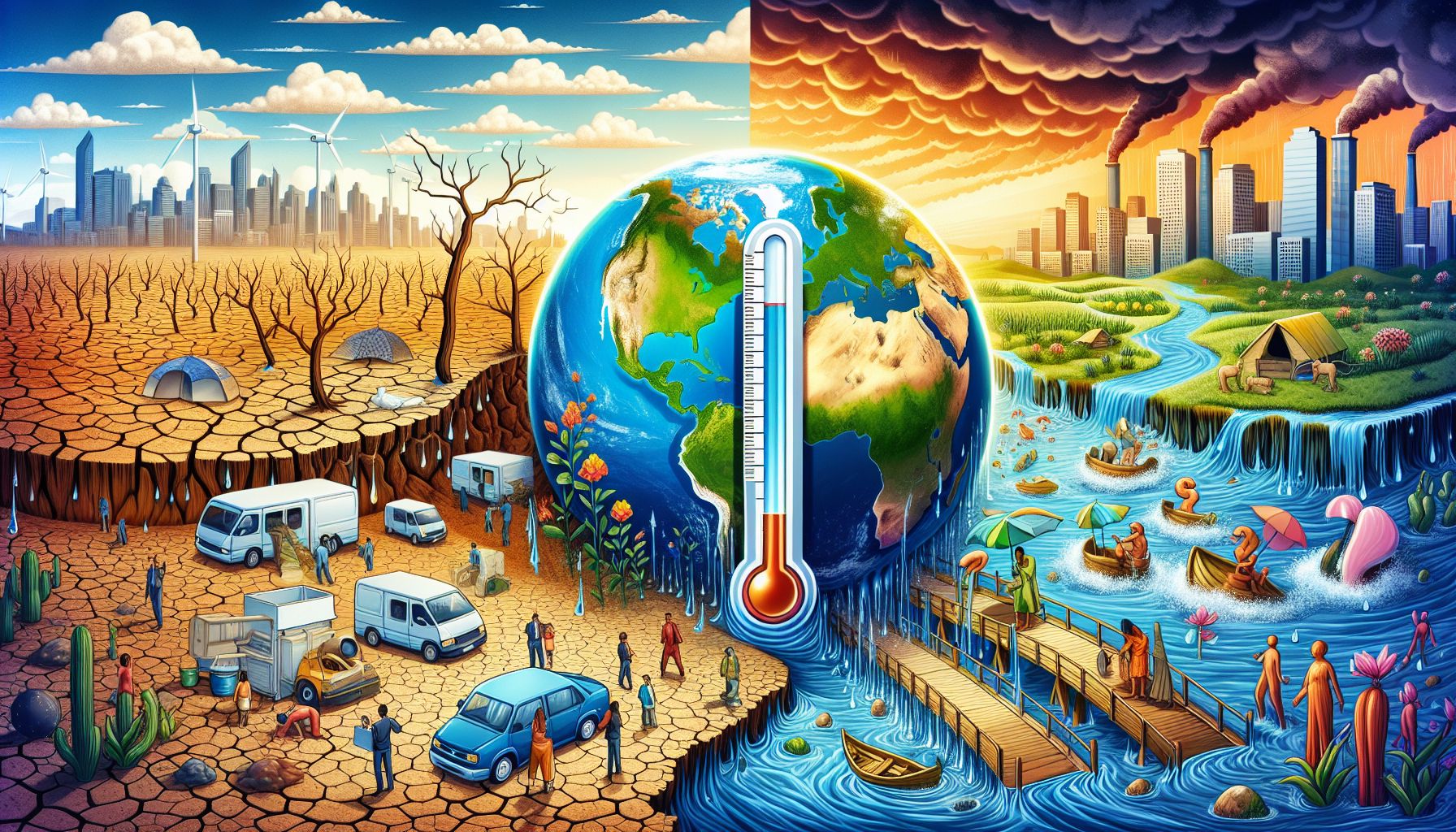
Climate change poses a significant threat to our planet in various ways, and among its many impacts, the alteration of global water resources stands out as particularly critical. This issue not only affects water availability but also has profound implications for agriculture, human health, ecosystem balance, and global economies. In this article, we will delve into the reality of climate change’s influence on global water resources and explore the intricacies of how our precious and life-sustaining water system is being altered.
Understanding Climate Change and the Water Cycle
To comprehend how climate change influences water resources, it’s essential to understand the water cycle. The water cycle, or hydrologic cycle, is the continuous movement of water on, above, and below the Earth’s surface. It involves processes such as evaporation, condensation, precipitation, and runoff. Climate change, primarily caused by the increase in greenhouse gases such as carbon dioxide, methane, and nitrous oxide, affects each of these processes in distinct ways:
Evaporation and Precipitation Patterns
Warmer temperatures lead to increased evaporation rates. As the atmosphere warms, it can hold more moisture, which can result in changes in precipitation patterns. Some regions experience heavier rainfall and more frequent and intense storms, while others suffer from prolonged droughts.
Ice and Snow Melt
The rising global temperatures contribute to the melting of glaciers and ice caps, leading to an initial increase in freshwater availability in some rivers and streams. However, this is a short-term phenomenon. In the long run, the loss of these ice reserves threatens the water supply for millions, especially during the warmer months when meltwater from snow and ice typically replenishes freshwater sources.
Sea-Level Rise
The expansion of ocean water due to warming and the contribution of melting ice lead to rising sea levels. This can cause the intrusion of saltwater into freshwater aquifers, reducing the amount of potable water available for human consumption and agriculture in coastal areas.
Extreme Weather Events
Climate change increases the frequency and severity of extreme weather events such as hurricanes, floods, and droughts. These events disrupt water availability, destroy water infrastructure, and contaminate freshwater sources with pollutants and pathogens.
Impacts on Human Health and Societies
Water is fundamental to all aspects of human life. Hence, the changes in global water resources can have drastic effects on human health and societies:
Drinking Water Scarcity
As climate change exacerbates droughts in certain regions, the availability of drinking water becomes threatened. Water scarcity can lead to dehydration and waterborne diseases, impacting millions of people worldwide.
Agriculture and Food Security
Water is vital for agriculture. Changes in water availability, along with altered growing seasons due to temperature shifts, can lead to reduced crop yields and threaten food security.
Economic Consequences
Water scarcity and the degradation of water quality can have significant economic consequences, affecting industries from agriculture to manufacturing. Costs can rise due to the need for water treatment, irrigation, and the construction of new water infrastructure.
Ecological Impacts
The ecosystems that rely on stable water environments are vulnerable to the changes climate change brings:
Aquatic Ecosystems
Shifts in temperature and precipitation patterns affect river flows, lake levels, and aquatic habitats. This can disrupt the life cycles of endemic species and lead to decreased biodiversity.
Terrestrial Ecosystems
Changes in soil moisture due to altered precipitation patterns can affect plant growth, leading to changes in terrestrial ecosystems and landscapes. Drought-stressed forests become more susceptible to pests and wildfires, leading to habitat destruction and further carbon emissions.
Global and Local Responses
Addressing the impact of climate change on global water resources requires both global coordination and local action. Some of the strategies include:
International Agreements
International agreements, such as the Paris Agreement, aim to mitigate climate change through commitments to reduce emissions. By limiting global temperature rise, we can reduce the associated impacts on water resources.
Water Resource Management
Developing sustainable water resource management practices can help mitigate the impacts of climate change. This includes improving water-use efficiency, investing in water-saving technologies, and protecting wetlands and watersheds.
Infrastructure Adaptation
Investing in infrastructure that is resilient to climate change is crucial. This includes the construction of dams and reservoirs to capture excess rainfall, the development of desalination plants, and the strengthening of flood defenses.
Public Awareness and Education
Educating the public about the impacts of climate change and the importance of water conservation can lead to behavioral changes that contribute to water sustainability.
Conclusion
The impact of climate change on global water resources is a pressing challenge with far-reaching implications for all forms of life on Earth. Addressing this issue will require a collaborative effort between nations, communities, and individuals. By understanding the connection between climate change and water, we can work towards solutions that ensure the availability of this essential resource for future generations.
Sources
- “Water and Climate Change,” United Nations Water. https://www.unwater.org/water-facts/climate-change/
- “Climate Change: Global Temperature,” NOAA Climate.gov. https://www.climate.gov/news-features/understanding-climate/climate-change-global-temperature
- “The Paris Agreement,” UN Climate Change. https://unfccc.int/process-and-meetings/the-paris-agreement/the-paris-agreement