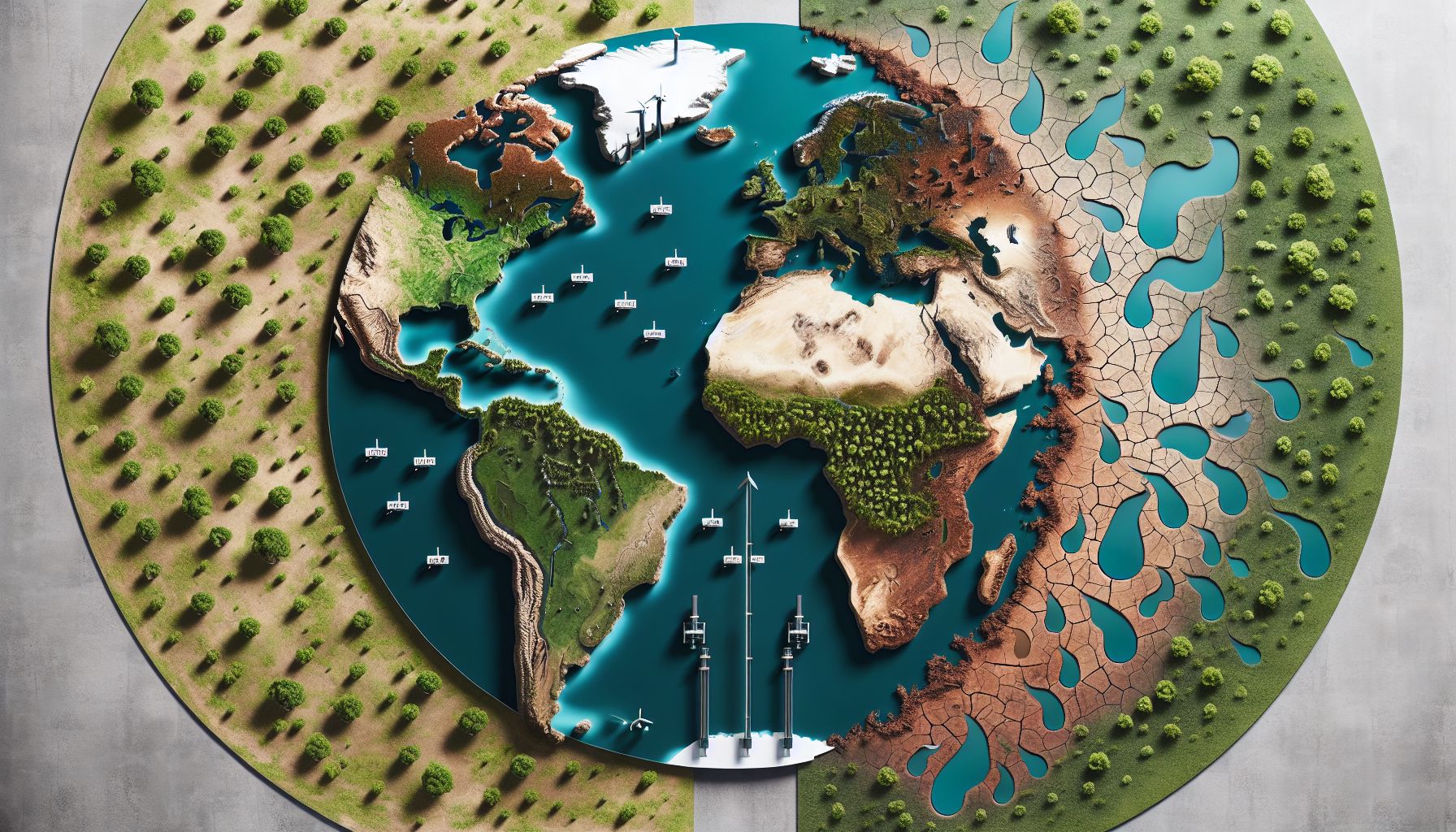
Climate change is a disruptive force affecting every aspect of our planet, including the vital resource we often take for granted: water. With population growth, agricultural expansion, and industrial development already pressuring our water supplies, climate change amplifies these challenges, threatening the availability, quality, and distribution of water resources globally. This article delves into the complex relationship between climate and water, exploring the far-reaching consequences of a warming climate on our hydrating lifeline.
Understanding Climate Change and the Water Cycle
Before delving into the impact, it’s important to understand how climate change intersects with the water cycle. At its core, climate change refers to the long-term alteration of temperature and typical weather patterns in a place. While climate variability happens naturally, human activities, particularly the burning of fossil fuels, are the main driver of the accelerated changes we’re witnessing today.
The water cycle, an intricate system involving the continuous movement of water on, above, and below the surface of the Earth, is highly sensitive to fluctuations in temperature. This cycle encompasses processes such as evaporation, condensation, precipitation, infiltration, runoff, and storage in glaciers and ice caps.
Climate change is disrupting this balance, and here’s how:
Rising Temperatures and Evaporation Rates
Global temperatures have been increasing, with the Earth’s surface temperature in 2019 approximately 0.95 degrees Celsius warmer than the 20th-century average. Warmer temperatures enhance the rate of evaporation from both land and sea surfaces, leading to more moisture in the atmosphere which can affect global precipitation patterns.
Precipitation Extremes
Climate change contributes to more intense and frequent extreme weather events, including heavy rainfall and snowfall in some regions and severe droughts in others. These extremes result in an uneven distribution of water resources, with some areas experiencing floods and others facing acute water shortages.
Melting Glaciers and Ice Caps
Earth’s polar and mountain ice stores are melting at unprecedented rates, contributing to rising sea levels. This meltwater increases the volume of the world’s oceans and can dilute saltwater ecosystems. Meanwhile, communities that rely on meltwater from glaciers for freshwater are at risk of losing their main water source.
Sea Level Rise
As glaciers melt and warmer temperatures cause seawater to expand, sea levels rise. This encroachment threatens low-lying islands and coastal communities, exacerbates saltwater intrusion into freshwater aquifers, and impairs coastal ecosystems that play a role in water purification.
Global Impacts and Regional Variations
The impact of climate positioning on water resources is not uniform and varies greatly by region:
Africa
Africa is particularly vulnerable due to its generally low adaptive capacity. Increased temperatures and altered precipitation patterns are likely to reduce water availability in many African regions, exacerbating water stress and impacting food security.
Asia
The vast continent of Asia faces varied impacts, from glacial meltwater affecting river flows in the Himalayas, to intensified monsoons and increased flooding in Southeast Asia, to arid conditions intensifying in the Middle East.
Australia
Australia is experiencing longer and more severe droughts, especially in its agricultural heartlands, compounded by reduced rainfall in southern and eastern parts of the continent.
Europe
While Northern Europe might see increased precipitation, Southern Europe is expected to become significantly drier, affecting crop yields and water supply for urban and rural consumption.
North America
The Western United States is enduring more frequent and prolonged drought conditions, leading to water shortages and increased wildfires, while the Eastern United States faces challenges from increased heavy downpour events.
South America
The Andean glaciers are retreating, affecting water supply for millions, and the Amazon region faces threats from both droughts and floods, impacting river navigation, ecosystems, and hydroelectric power generation.
Arctic and Antarctic
Polar regions are experiencing rapid ice melt, altering oceanic currents and impacting marine life that relies on ice cover for survival.
Social and Economic Repercussions
The repercussions of climate change on water resources reverberate through all levels of society and the economy. Here are some of the critical areas affected:
Human Health
Water scarcity and poor water quality can lead to a higher risk of waterborne diseases. Furthermore, extreme weather events that result in floods or droughts can disrupt access to clean drinking water.
Agriculture
Agriculture, a major consumer of freshwater, is hit hard by changes in precipitation and water availability, affecting food security and livelihoods, especially in developing countries.
Energy Production
Power generation, particularly hydroelectric and thermoelectric plants, requires substantial water resources. Variability in water availability can disrupt these operations and lead to increased competition for water resources.
Biodiversity and Ecosystems
Alterations in water temperature, ice cover, and flow regimes impact aquatic and terrestrial ecosystems, affecting species distribution and contributing to habitat loss.