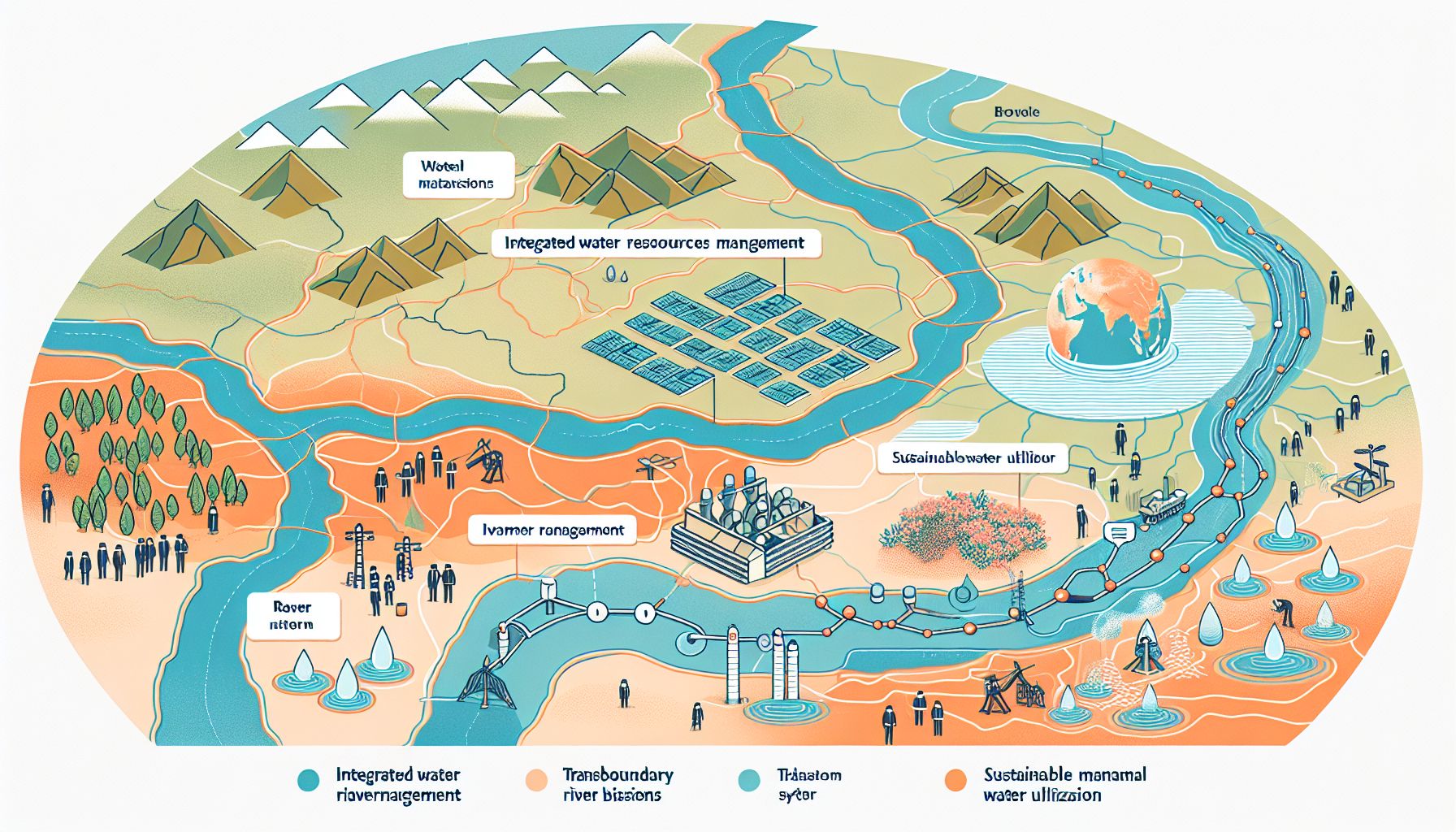
Water has always been an essential, life-sustaining resource, but in the world of ever-increasing demand and limited supply, managing it wisely has never been more critical. When it comes to transboundary rivers, which flow across at least two political borders, the challenge of managing these waters becomes a complex dance of geopolitics, economics, and sustainability. Integrated Water Resources Management (IWRM) presents a comprehensive framework aimed at harmonizing the needs of people and ecosystems that rely on transboundary rivers while fostering cooperation among nations.
Understanding Integrated Water Resources Management (IWRM)
Integrated Water Resources Management is a process that promotes the coordinated development and management of water, land, and related resources, to maximize economic and social welfare without compromising the sustainability of vital ecosystems. The approach is based on the understanding that water is an integral part of the ecosystem, a natural resource, and a social and economic good.
The key principles of IWRM include:
- Equitable and efficient use of water: Ensure that water allocation is fair and efficient, delivering the greatest benefit to the most significant number of users.
- Participatory approach: Involve all stakeholders, including the general public, in the decision-making process, recognizing their right to have a say in how water resources are managed.
- Sustainable water services: Guarantee that water use today does not compromise the ability of future generations to utilize the same resources.
- Water as part of the ecosystem: Promote practices that protect and improve the health of water-related ecosystems for their intrinsic value and the human communities that depend on them.
Challenges for Transboundary River Basins
Transboundary river basins face unique challenges that make IWRM particularly important:
- Political fragmentation: Different countries may have varying priorities, laws, and levels of development, making a unified management strategy difficult.
- Conflicting needs: The diverse needs of agriculture, industry, households, and conservation can lead to competition and conflict over water resources.
- Asymmetric power and benefits: Downstream countries may be at the mercy of actions taken by upstream countries, creating power imbalances.
- Cross-border communication: There may be linguistic, cultural, and bureaucratic barriers hampering the effective sharing of information and expertise.
- Climate change: Alterations in precipitation and temperature patterns can exacerbate existing challenges and unpredictability of water flow.
Strategies for Effective IWRM in Transboundary River Basins
1. Establishing Legal and Institutional Frameworks
Creating strong, binding agreements and institutions that cross political boundaries is crucial. These frameworks should establish clear rights, responsibilities, and dispute resolution mechanisms.
Example: The Mekong River Commission (source)
An organization that provides the institutional structure for regional dialogue and cooperation in the Lower Mekong River Basin.
2. Promoting Joint Monitoring and Data Sharing
An integrated monitoring system that collects and shares water data among nations allows for evidence-based decision-making and fosters transparency.
Example: The Indus Water Treaty (source)
The treaty between India and Pakistan includes provisions for data sharing on river flows, facilitating joint management and planning.
3. Encouraging Participative Management
Involving local communities and various stakeholders in decision-making can enhance the effectiveness of water management policies and ensure they meet the needs of all.
4. Harmonizing Policies and Actions
Aligning national policies and actions with the agreed-upon management strategies helps maintain a coherent approach to water management across borders.
5. Applying Adaptive Management
Given the variations in climate and social circumstances, adaptive management strategies that can evolve with changing conditions are necessary.
6. Implementing Ecosystem-based Management
Safeguarding ecosystems is essential in maintaining the natural functions of river basins, which, in turn, supports human well-being.
7. Investing in Infrastructure and Technology
Shared investments in infrastructure like dams, irrigation, and flood control systems can help optimize the distribution and use of water, provided they are designed with the entire basin in mind.
Case Study: The Nile River Basin Initiative
An initiative aimed at facilitating joint investments and promoting efficient water use for agriculture and hydropower among the Nile basin countries.
8. Fostering Economic Instruments
Economic tools such as water pricing, incentives for efficient use, and funding for conservation projects can encourage sustainable water use practices.
9. Supporting Capacity Building and Education
Developing local expertise and providing education on water management issues help create informed stakeholders and decision-makers.
10. Ensuring Financial Sustainability
Long-term financial planning is necessary to support management initiatives and maintain shared water infrastructure.
Benefits of IWRM in Transboundary River Basins
Successful implementation of IWRM in transboundary river basins can yield multiple benefits:
- Peace and cooperation: IWRM serves as a platform for dialogue and cooperation, reducing the risk of conflicts.
- Economic growth: Joint management can lead to more efficient water use, contributing to economic development.
- Environmental conservation: Protecting water resources helps preserve biodiversity and ecosystem services.
- Societal well-being: Equitable distribution of water resources can improve health and livelihoods, particularly in disadvantaged communities.
- Resilience to climate change: Adaptable and sustainable management practices are critical for coping with the uncertainties related to climate change.
The Road Ahead
While there are success stories of IWRM in transboundary river basins, significant challenges remain. The increasing demands of growing populations, industrialization, and the intensifying impacts of climate change put pressure on these complex systems. It is only through continued cooperation, investment, and the sharing of knowledge and resources that we can hope to sustainably manage these vital waterways for the prosperity of all nations and people involved.
Conclusion
Integrated Water Resources Management is not a silver bullet that will solve all the problems inherent to managing transboundary river basins. However, it provides a holistic framework that, when implemented effectively, can balance diverse interests and sustain the health of both human communities and the environment. The reality is that water knows no boundaries. Therefore, the future of water management lies in recognizing the interconnectedness of our ecosystems and societies, and the need for collective responsibility and action.
Useful Sources for Further Reading:
- United Nations World Water Assessment Programme: UN WWAP
- The Global Water Partnership’s Toolbox on IWRM: GWP Toolbox
- International River Foundation: IRF
With coordinated efforts, we strive for a future where every drop of water that flows through the veins of our planet serves as a force for cooperation and sustainable growth, rather than a source of conflict and scarcity.