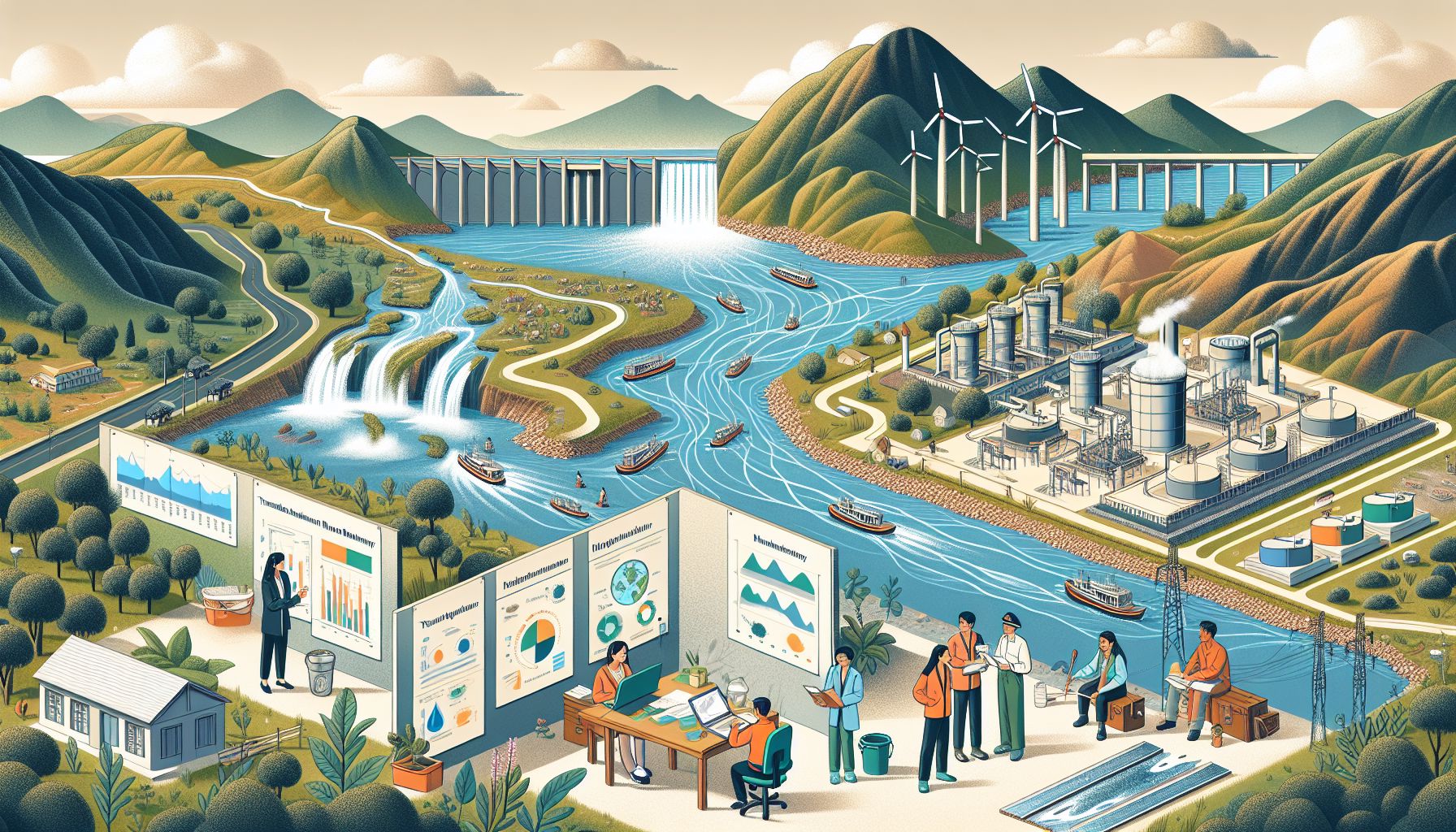
Water is the lifeblood of civilizations, and its management is a crucial endeavor, especially when it comes to transboundary river basins, where water flows across the borders of two or more nations. With the increasing demand for water and the growing pressures from climate change, managing these river basins sustainably is not just an option but a necessity.
Integrated Water Resources Management (IWRM) is a comprehensive approach that ensures the coordinated development and management of water, land, and related resources to maximize economic and social welfare equitably without compromising the sustainability of vital ecosystems.
In this in-depth article, we will explore the various components of IWRM, its challenges, the strategies for successful implementation in transboundary river basins, and case studies of where it has been successfully applied or where it could have a significant impact.
Understanding Transboundary River Basins
Before diving into IWRM, let’s understand what transboundary river basins are. A transboundary river basin is a geographic area defined by the watershed of a river that crosses at least one political border, whether it be national or international. Examples of such basins include the Nile, which spans 11 countries, the Amazon crossing seven countries, and the Mekong in Southeast Asia passing through six countries.
Managing these rivers requires cooperation and collaboration between all the countries sharing the water resources, guided by international law, treaties, and regional agreements.
Key Principles of IWRM in Transboundary River Basins
IWRM is based on the Dublin Principles, which were adopted at the International Conference on Water and the Environment in Dublin, Ireland, in 1992. These principles are:
- Fresh water is a finite and vulnerable resource, essential to sustain life, development and the environment.
- Water development and management should be based on a participatory approach, involving users, planners, and policymakers at all levels.
- Women play a central part in the provision, management, and safeguarding of water.
- Water has an economic value in all its competing uses and should be recognized as an economic good.
When applied to transboundary river basins, these principles emphasize the need for:
- Close cooperation between nations sharing the water resources
- Joint planning and management between the countries involved
- Sustainable and equitable water allocation
- Preservation of ecosystems within the river basin
- Recognition of the social, economic, and environmental values of water
Strategies for Success in Transboundary IWRM
1. Develop Shared Vision and Objectives
Creating a shared vision among the nations sharing the river basin is essential. This should reflect a collective long-term perspective on development goals, desired outcomes, and management strategies.
2. Establish Institutional Frameworks
Institutional frameworks that enable cooperation and joint decision-making are crucial. These include river basin organizations (RBOs), treaties, and international laws that help prevent and resolve conflicts.
3. Joint Monitoring and Data Sharing
Cooperative monitoring systems facilitate the sharing of critical data, such as water quality and quantity, which is essential for informed decision-making and trust-building among countries.
4. Participatory Approach
Engaging all stakeholders, including communities, civil society organizations, and the private sector can ensure that multiple perspectives are considered, which is vital for sustainable management.
5. Harmonize Policies and Legislation
Aligning national policies and legal frameworks with the agreed-upon principles of IWRM in transboundary contexts helps in creating a coherent management approach.
6. Sustainable Financing Mechanisms
Resources are required for the management and development of transboundary water resources. Establishing sustainable financial mechanisms and investment strategies is key to long-term sustainability.
7. Build Capacity and Knowledge Exchange
Investing in human and institutional capacity building and promoting knowledge exchange ensures that all parties are well-equipped to manage water resources effectively.
8. Conflict Resolution Mechanisms
Mechanisms to preemptively address and resolve disputes should be an integral component of any transboundary IWRM strategy.
Case Studies in Transboundary IWRM
The Mekong River Commission (MRC)
The MRC is a successful example of IWRM at work. Established by the governments of Cambodia, Laos, Thailand, and Vietnam, the commission aids in the sustainable management of the Mekong River Basin. Cooperative efforts have led to joint water resource planning and development, ensuring equitable use while preserving the environment.
The Nile Basin Initiative (NBI)
The NBI is an intergovernmental partnership of the Nile riparian states. Its objective is to achieve sustainable socio-economic development through the equitable utilization of, and benefit from, the common Nile Basin water resources.
Challenges and Way Forward
Implementing IWRM in transboundary river basins faces numerous challenges, including political tensions, inadequate legal frameworks, differing national priorities, and lack of financial resources. Addressing these challenges requires robust diplomacy, political will, and innovative financing.
As climate change continues to alter water availability and increasing populations add to water demands, IWRM remains an essential framework for transboundary water resource management. By promoting cooperation, balancing competing uses, and protecting ecosystems, IWRM can contribute to peace, development, and environmental sustainability.
Conclusion
The sustainable management of transboundary river basins through IWRM is a complex but critical endeavor in our increasingly interconnected world. By implementing the strategies discussed and learning from successful case studies, nations sharing these vital resources can ensure that they are managed in a way that is fair, efficient, and sustainable for all.
Sources
- “Transboundary Waters,” United Nations. https://www.unwater.org/water-facts/transboundary-waters/
- “Integrated Water Resources Management (IWRM) in Transboundary Basins,” UNESCO. https://en.unesco.org/themes/water-security/hydrology/IWRM-transboundary
- “Mekong River Commission (MRC),” Mekong River Commission. http://www.mrcmekong.org/
Understanding and embracing the principles of IWRM in transboundary river basins can guide us toward a future where water resources are managed sustainably, with cooperation and respect for all who depend on them.