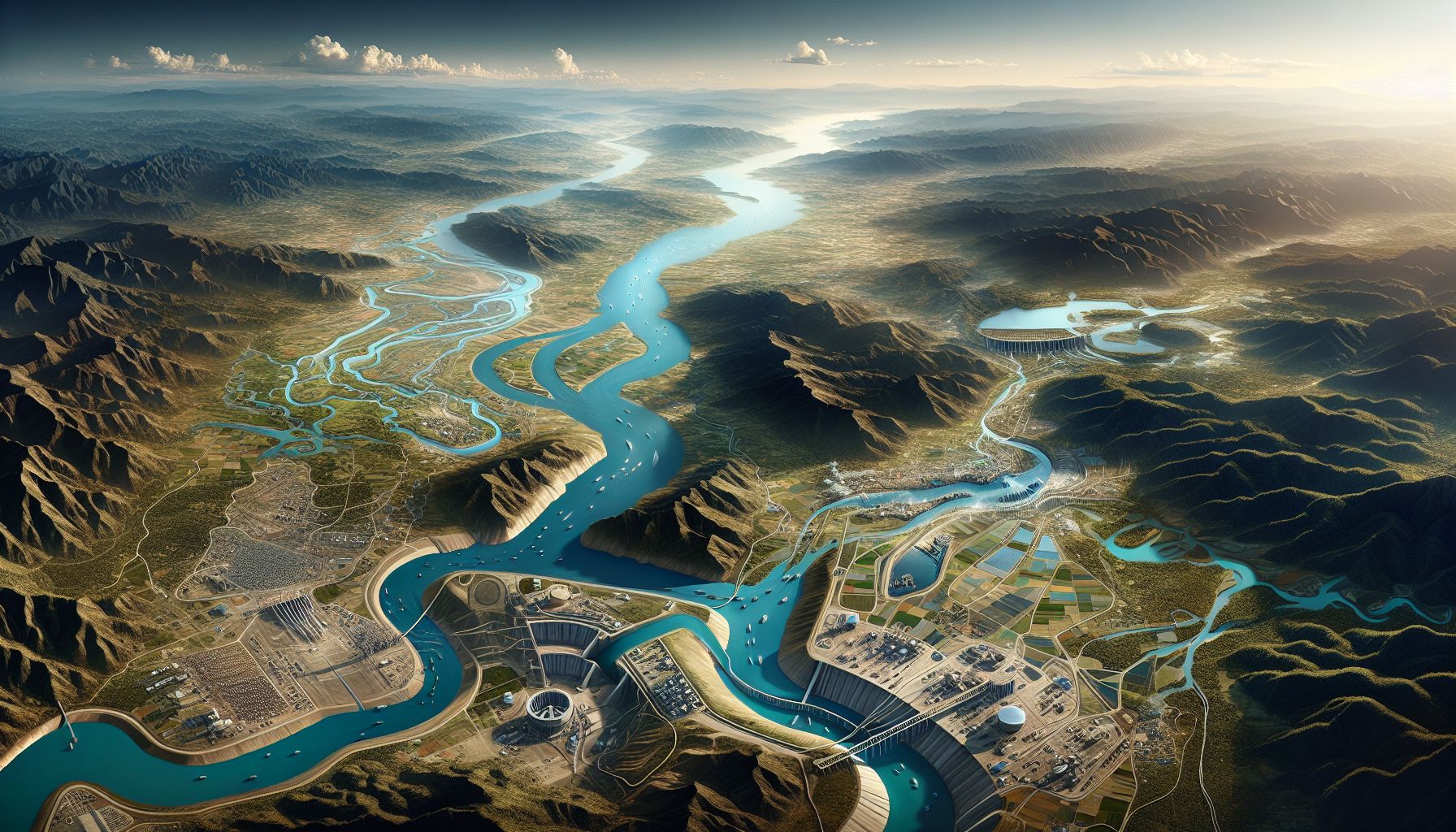
Water is a precious resource that must be managed sustainably to ensure the well-being of both humans and the environment. Transboundary river basins pose a unique challenge when it comes to water resources management, as they span multiple countries with potentially conflicting interests. In this article, we will explore the concept of integrated water resources management (IWRM) and how it can be applied to transboundary river basins to ensure equitable and efficient use of water resources.
Understanding the challenges of transboundary river basins
Transboundary river basins are shared by two or more countries, making coordinated water management essential to prevent conflicts and ensure the sustainable use of water resources. These river basins often face challenges such as:
- Unequal distribution of water resources among countries
- Variability in water availability due to climate change
- Conflicting interests and priorities among riparian countries
- Pollution and degradation of water quality
- Lack of coordinated management and data sharing
The concept of integrated water resources management
IWRM is a holistic approach to water resources management that takes into account the interconnectedness of water resources, ecosystems, and human activities. It aims to balance the competing needs of different stakeholders while ensuring the sustainable use of water resources for future generations. Some key principles of IWRM include:
- Stakeholder participation: Involving all relevant stakeholders in the decision-making process to ensure that their voices and concerns are heard.
- Ecosystem protection: Recognizing the intrinsic value of ecosystems and ensuring that water management practices do not harm the environment.
- Adaptive management: Continuously monitoring and adjusting water management strategies in response to changing conditions and new information.
- Transboundary cooperation: Promoting cooperation and dialogue among riparian countries to prevent conflicts and promote shared benefits.
Applying IWRM to transboundary river basins
When it comes to transboundary river basins, the principles of IWRM can help to promote sustainable water management practices and prevent conflicts among riparian countries. Some key strategies for applying IWRM to transboundary river basins include:
- Joint data collection and sharing: Establishing mechanisms for sharing data on water availability, quality, and use among riparian countries to promote transparency and informed decision-making.
- Coordinated water allocation: Developing agreements and mechanisms for allocating water resources equitably among riparian countries based on their needs and priorities.
- Ecosystem protection: Implementing measures to protect and restore ecosystems within the transboundary river basin to ensure the long-term health of the environment.
- Dispute resolution mechanisms: Establishing protocols and frameworks for resolving disputes over water resources in a peaceful and equitable manner.
Case study: Mekong River Basin
One example of successful transboundary water management is the Mekong River Basin, which spans six countries in Southeast Asia. The Mekong River Commission, established in 1995, has been instrumental in promoting cooperation and dialogue among riparian countries to ensure sustainable management of the river basin. Through joint data collection, risk assessments, and stakeholder engagement, the Mekong River Commission has been able to address challenges such as droughts, floods, and hydropower development in a collaborative manner.
Conclusion
Integrated water resources management offers a comprehensive framework for promoting sustainable and equitable water management practices in transboundary river basins. By incorporating principles such as stakeholder participation, ecosystem protection, and transboundary cooperation, riparian countries can work together to ensure the long-term sustainability of shared water resources. As the global demand for water continues to rise, it is essential that countries collaborate and manage water resources in a holistic and integrated manner to address the challenges of transboundary river basins.
Sources:
1. UNEP-DHI Centre for Water and Environment. (2015). Transboundary River Basins. Link
2. Mekong River Commission. (2021). About Us. Link