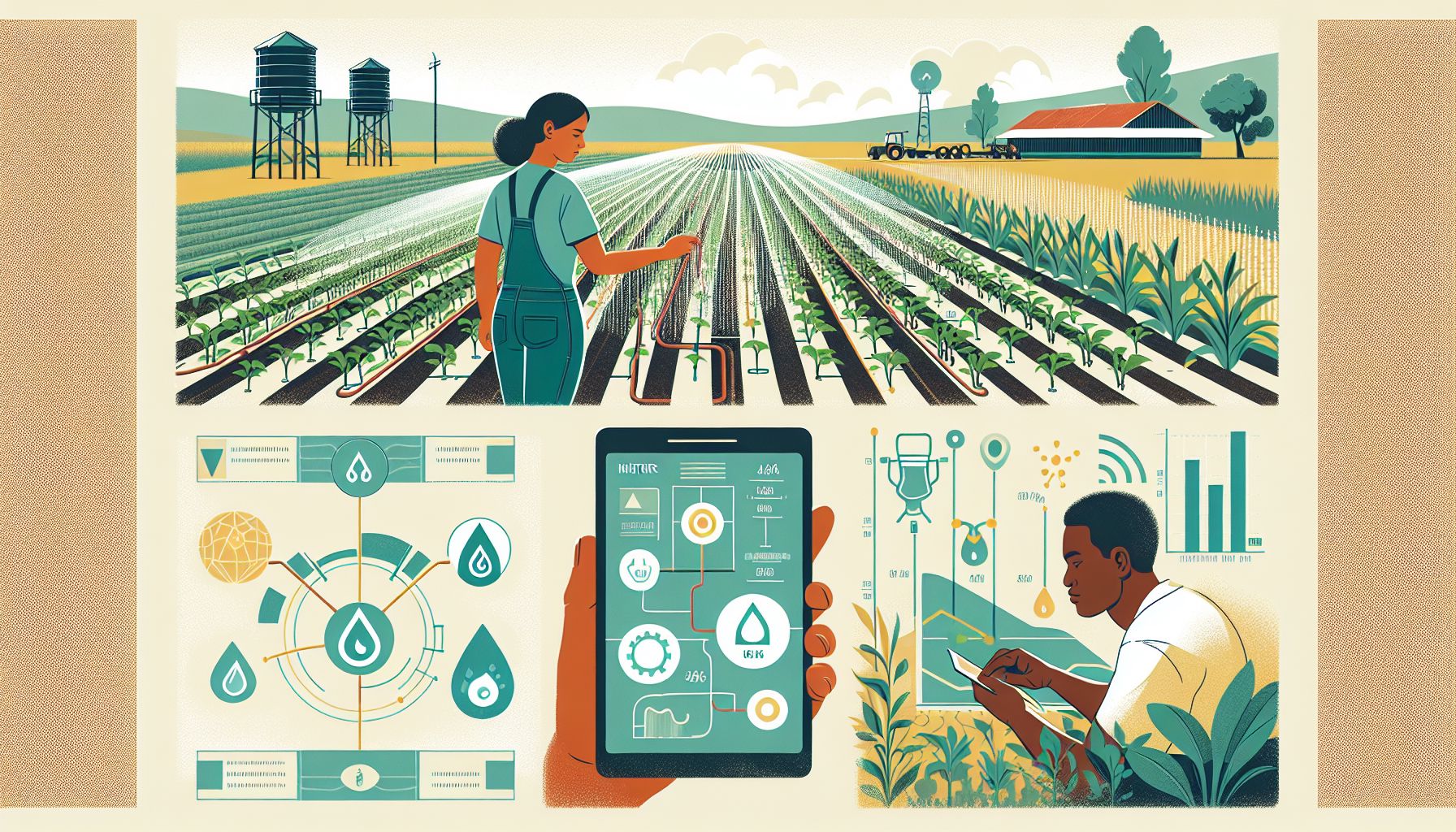
Water is the foundation of life, and nowhere is its responsible management more critical than in agriculture. As the global population continues to grow and climate change introduces new challenges, it becomes imperative for farmers and agricultural stakeholders to employ sustainable water management practices to ensure food security and environmental conservation. This article delves into several strategies and practices that can be utilized in the agricultural sector to achieve efficient and sustainable use of water resources.
Understanding the Importance of Water in Agriculture
Agriculture accounts for approximately 70% of worldwide water use, making it the largest consumer of freshwater resources [1]. The sector relies heavily on water for irrigation, livestock, and aquaculture. However, inefficient use and mismanagement can lead to water scarcity, degradation of water quality, and negative impacts on ecosystems.
The Challenge of Growing Demand and Climate Change
With the global population expected to reach 9.7 billion by 2050, the demand for agricultural products will increase significantly [2]. This, coupled with changing rain patterns, extended droughts, and other effects of climate change, threatens the sustainability of water resources. As such, there is a pressing need to adopt practices that maintain agricultural productivity while conserving water.
Efficient Irrigation Techniques
Drip Irrigation
Drip irrigation is a highly efficient watering system that delivers water directly to the root zone of plants, reducing evaporation and minimizing runoff. By providing precise water amounts tailored to the crops’ needs, drip irrigation conserves water and can result in water savings of up to 60% compared to traditional methods [3].
Sprinkler Irrigation Systems
Modern sprinkler systems can be customized to match the specific requirements of different crops, soils, and terrains. Technologies like variable rate irrigation (VRI) can adjust the amount of water delivered to different parts of a field, optimizing water use.
Subsurface Irrigation
Subsurface irrigation involves delivering water below the soil surface, either through buried pipes or porous materials. This method can significantly reduce evaporation losses and is especially suitable for areas with high evapotranspiration rates.
Crop Selection and Rotation
Choosing crops that are well-suited to the local climate and soil can significantly reduce the need for supplemental water. Drought-resistant varieties and native plants usually require less water and are better adapted to withstand fluctuations in water availability. Additionally, rotating crops can improve soil health, reduce pest pressures, and help balance water use over time.
Soil Management Techniques
Soil health is essential for water conservation. Healthy, well-structured soils have improved water retention capabilities and reduced runoff.
Mulching
Covering soil with organic or inorganic materials helps maintain moisture, reduce weed growth, and protect against soil erosion. Mulching also moderates soil temperature, aiding plant growth.
Conservation Tillage
Reducing or eliminating tillage preserves soil structure, enhances water infiltration, and retains moisture. Practices like no-till or reduced-till farming can significantly reduce water usage and improve soil health.
Cover Crops
Planting cover crops during off-season periods can improve soil structure, increase organic matter, and enhance water retention. Certain cover crops can also act as natural “water pumps,” drawing water from deeper soil layers and making it available to the main crops.
Water Storage and Harvesting
Harvesting rainwater and storing it for dry periods is a centuries-old practice that is regaining popularity as a sustainable water management solution. Ponds, reservoirs, and tanks can capture and store rainwater for later use, ensuring a more reliable water supply for agriculture.
On-Farm Reservoirs
Farmers can build reservoirs to collect runoff from fields or store water from rainfall. These reservoirs serve as buffers during dry spells, enabling continued irrigation when water sources become scarce.
Rainwater Harvesting Systems
By installing gutters and storage tanks, farmers can capture rainwater from greenhouse roofs, farm buildings, and other structures. This water can then be used for irrigation, livestock, or other agricultural needs.
Technology and Data-Driven Solutions
Advances in technology are providing farmers with tools to optimize water use and improve sustainability.
Precision Agriculture
Precision agriculture leverages GPS, sensors, and data analytics to monitor soil moisture levels, crop health, and local weather conditions. By using this information, farmers can make informed decisions about when and how much to irrigate.
Farm Management Software
Software platforms can integrate water use data with other farm operations, enabling better planning and resource allocation. These tools help farmers recognize patterns and develop more water-efficient practices.
Remote Sensing
Drones and satellites can provide high-resolution data on crop conditions, soil moisture, and water usage across large areas. This data can help farmers identify field areas that need more or less water, leading to more precise irrigation practices.
Integrated Pest and Nutrient Management
Ensuring that water is not wasted due to poor pest and nutrient management is also critical. Over-irrigation can contribute to pest problems and nutrient leaching, while smart management can reduce the need for water-intensive interventions.
Biological Pest Control
Using beneficial organisms to keep pest populations in check can reduce water loss by minimizing the need for watering after pesticide applications. Similarly, integrated pest management (IPM) practices promote a balanced ecosystem and use targeted interventions, conserving water and protecting water quality.
Nutrient Management Plans
Properly managing fertilizers ensures that nutrients are available to crops when needed without excess runoff or leaching. Precision fertilization techniques, like fertigation (where fertilizers are applied with irrigation water), can improve nutrient uptake and reduce the overall need for water.
Community and Governmental Involvement
Collaboration among all stakeholders—farmers, communities, researchers, and policymakers—is essential for the successful implementation of sustainable water management practices.
Water Rights and Policies
Clear water rights and effective policies that promote sustainable use are key to ensuring that water is allocated fairly and used efficiently. Governments can also provide incentives for adopting water-saving technologies and practices.
Education and Outreach
Programs that educate farmers about the benefits and implementation of sustainable practices are vital. Extension services can provide training and support to help farmers transition to more water-efficient methods.
Research and Development
Continued research into new varieties, technologies, and practices can lead to further advancements in water conservation. Partnerships between the agricultural sector and research institutions can foster innovation and provide practical solutions that can be scaled up.
Conclusion
As the global population increases and climate conditions become more variable, sustainable water management in agriculture becomes increasingly important. By embracing a combination of traditional knowledge with modern technology and practices, farmers can significantly improve water efficiency and contribute to the conservation of our planet’s most precious resource. It is through coordinated effort and commitment to sustainability that we can ensure water security and agricultural resilience for future generations.
Sources
- Food and Agriculture Organization of the United Nations (FAO). “AQUASTAT.”
- United Nations, Department of Economic and Social Affairs, Population Division. “World Population Prospects 2019: Highlights.”
- [Rodriguez-Diaz, J.A., Weatherhead, E.K., Knox, J