Introduction
Agriculture has a profound impact on water resources around the world. With growing populations and shifting climates, the demands for food production and water supply have never been greater. Thus, the development and implementation of sustainable water management practices in agriculture is imperative. These approaches can not only reduce the pressure on the world’s freshwater resources but also ensure food security and the well-being of millions of farmers around the globe. This article offers an in-depth analysis of different approaches to managing water sustainably in the agricultural sector to offer viable solutions that secure a future with water.
Understanding the Water-Agriculture Nexus
Agriculture is the world’s largest consumer of water. In fact, it accounts for almost 70% of all world water withdrawals, according to the United Nations[1]. However, the water management in this sector is often inefficient and wasteful, leading to large losses and wastage. This underscores the need for water-efficient and sustainable agriculture.
The Imperative for Sustainable Use of Water in Agriculture
Labelled as the most water-intensive sector, agriculture stands at the forefront of the global water crisis. Many regions are facing severe water shortages, and more are predicted to join in the near future due to climate change repercussions. Sustainable water management is no longer a choice but a dire necessity to mitigate water scarcity, reduce environmental degradation, and maintain food security.
Key Approaches for Sustainable Water Management in Agriculture
1. Precision Irrigation
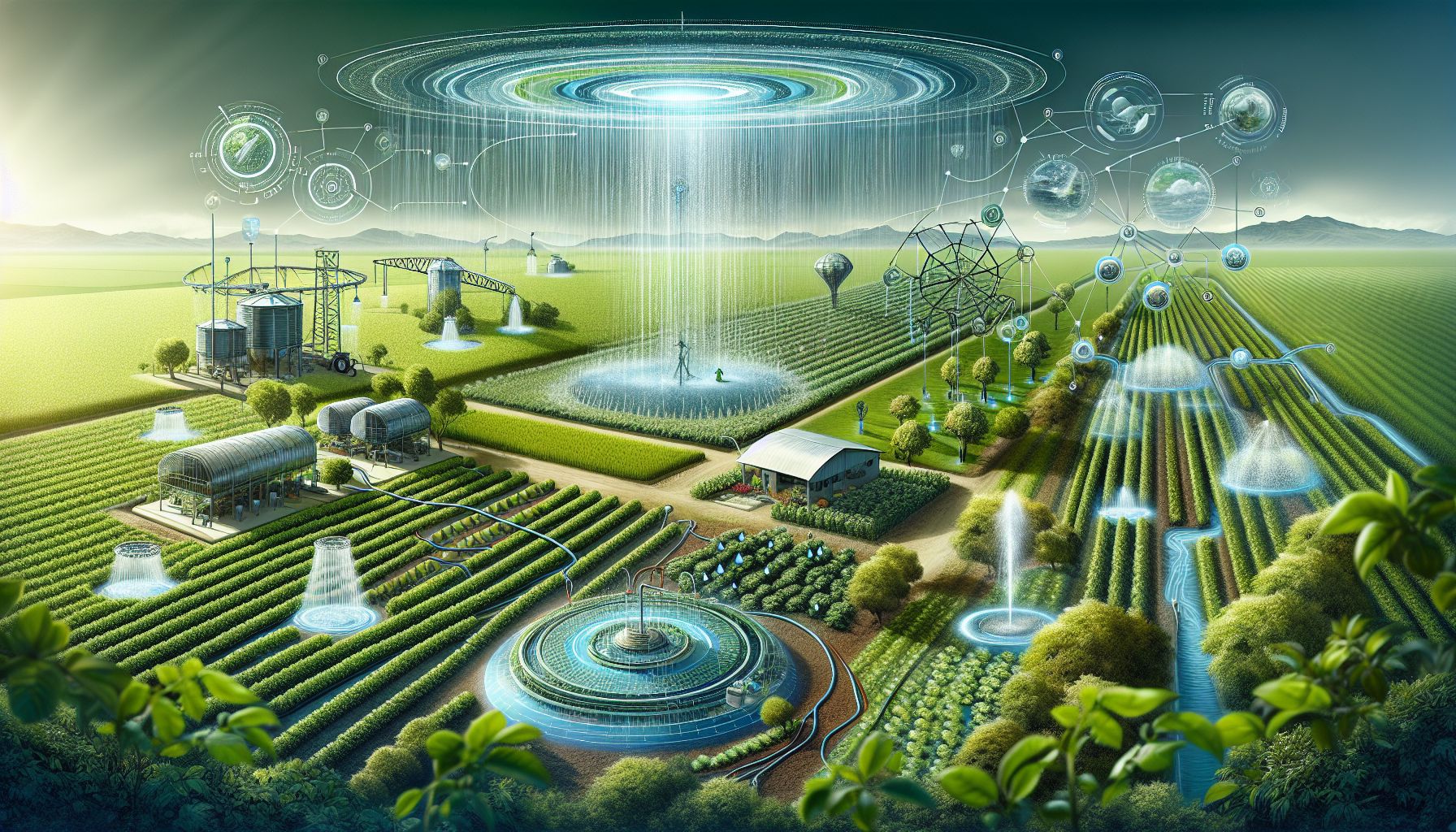
Precision irrigation utilizes technology such as sensors, real-time weather data and smart irrigation systems to apply the right amount of water at precisely the right stage of crop growth, reducing waste and water consumption. Technologies such as drip irrigation and sprinkler irrigation have been successful in achieving higher water use efficiency.
2. Crop Selection and Rotation
Selecting crops based on climate and soil conditions can significantly reduce water need. Additionally, crop rotation – growing different crops in the same area during different seasons – can break pest and disease cycles and improve soil fertility, which can ultimately reduce the need for water.
3. Soil and Water Conservation Practices
Methods like contour farming, terracing, and agroforestry can minimize water loss due to runoff and increase water retention in the soil. Conservation tillage, which leaves previous year crop residues in the fields, can increase soil organic matter and promote soil moisture conservation[2].
4. Water Harvesting and Storage
A crucial part of sustainable water management is utilizing every drop of water available. Capturing and storing rainwater through small dams, ponds or tanks can provide a reliable water source for crops, especially during periods of water scarcity.
5. Use of Treated Wastewater
Wastewater from urban areas or industries, after certain treatments, can be reused for irrigation. This would not only reduce freshwater withdrawals for agriculture but also mitigate water pollution.
Challenges and Future Directions
While adopting these sustainable water management practices has many benefits, it’s important to acknowledge the challenges too. These can include high initial costs, lack of knowledge and access to appropriate technologies, and policy and regulatory hurdles.
As we navigate these challenges, a multi-stakeholder approach involving farmers, governments, NGOs, research institutions, and the private sector is crucial. Additionally, education and capacity building for farmers, investment in research and development, and supportive policies can significantly expand the adoption of these practices.
Conclusion
Water scarcity is one of the most daunting challenges of the 21st century. Overcoming it requires a shift from the traditional water-intensive methods to more sustainable practices in agriculture. By embracing such methods, we can achieve a balance between conservation of our precious water resources and continued food production, securing a future for both the planet and its inhabitants.
References
1.”Water in Agriculture”. United Nations. https://www.un.org/en/sections/issues-depth/water/
2.B Lal.“Soil & Tillage Research”. Elsevier. https://www.sciencedirect.com/science/article/pii/S0167198707001224